


Xona prepares six-satellite launch for its Pulsar navigation service
Xona moves commercial navigation system toward orbit
Xona Space Systems is preparing to launch six satellites this month in the first operational step toward Pulsar, a commercial alternative to GPS for navigation and timing. The Burlingame, California startup says the planned low-Earth-orbit service will provide centimetre-level geolocation, rather than the metre-level precision associated with GPS.
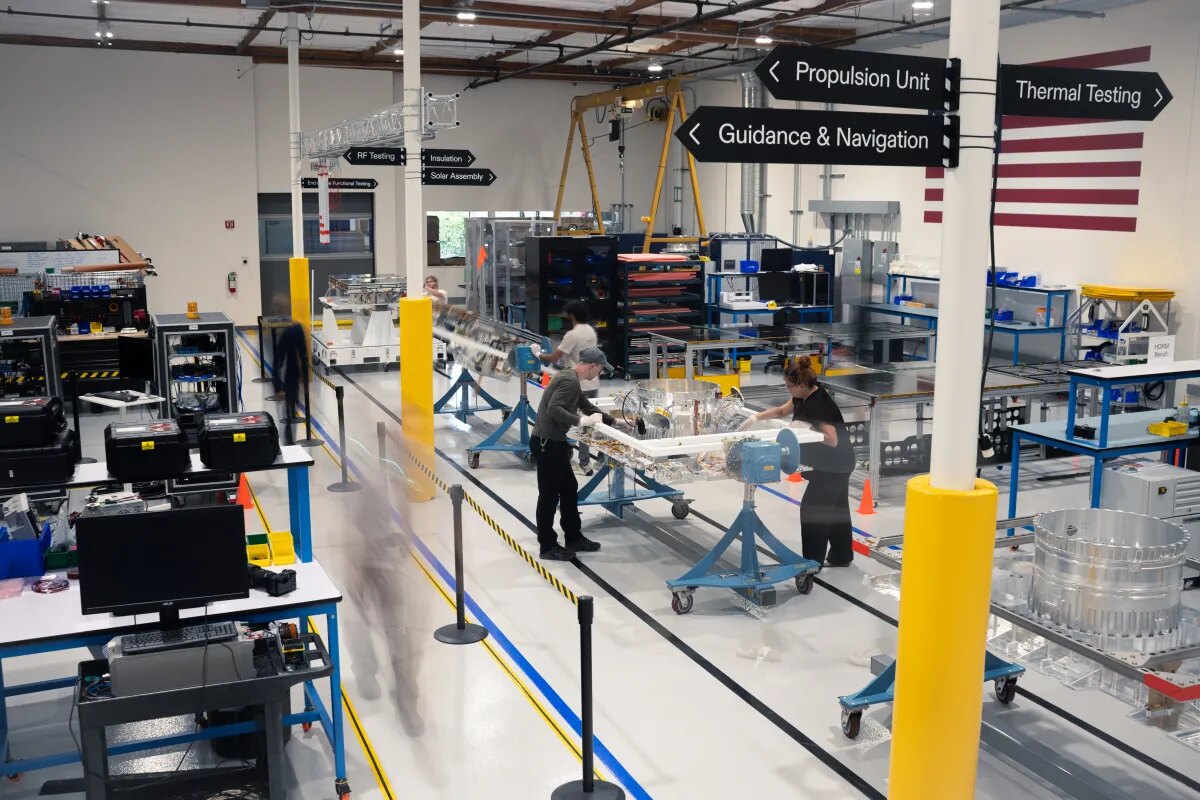
Four of the six spacecraft are similar to a prototype Xona launched last year to demonstrate its technology. They use a satellite platform from Aerospace Labs. The other two were built entirely at Xona’s headquarters and are intended to form the foundation of Pulsar, the company’s planned 258-satellite operational constellation.
A SpaceX rocket is scheduled to carry the satellites into orbit. Once they are operating, Xona expects to begin beta tests with real customers as the spacecraft pass over the mid-latitudes about eight times a day.
Stronger signals and timing without onboard atomic clocks
Xona was founded in 2019 by five engineers who met in Stanford University’s aerospace engineering graduate programme. Its technical aim is to improve the precision and resilience available from global navigation satellite systems, which include GPS and comparable networks operated by Europe, China and Russia.
The company developed an architecture intended to let its satellites maintain time without carrying expensive atomic clocks. It uses the spacecraft’s proximity to Earth and close communication with ground-based sources of time. Xona also designed the service so that existing GPS receivers can receive its signal after a relatively simple software modification.
Pulsar is intended to deliver a stronger signal that can be detected inside buildings and in urban settings. Chief executive Brian Manning also says its power could make interference and spoofing more difficult. Jamming and spoofing of satellite-navigation services have become increasingly common in conflicts, and the technology has drawn US government interest.
Initial users and a route to wider coverage
TimeBeat, which specialises in electronic timing, plans to use the initial pilot to check and correct timing delivered by its devices around the world. Xona has raised just over $300 million since its founding, including $20 million from the US Space Force.
Xona hopes to provide full coverage in the United States, Europe, Japan and South Korea by 2028. The company sees applications in autonomous vehicles, farming robots and other systems that need more precise positioning or dependable timing than conventional GPS can provide on its own.
For businesses operating autonomous equipment or timing-sensitive infrastructure, the launch is a reason to identify where GPS precision, signal availability and resistance to interference currently limit operations, then evaluate commercial alternatives as pilot coverage becomes available.