


TechCrunch Disrupt 2026 to examine AI model and hardware choices
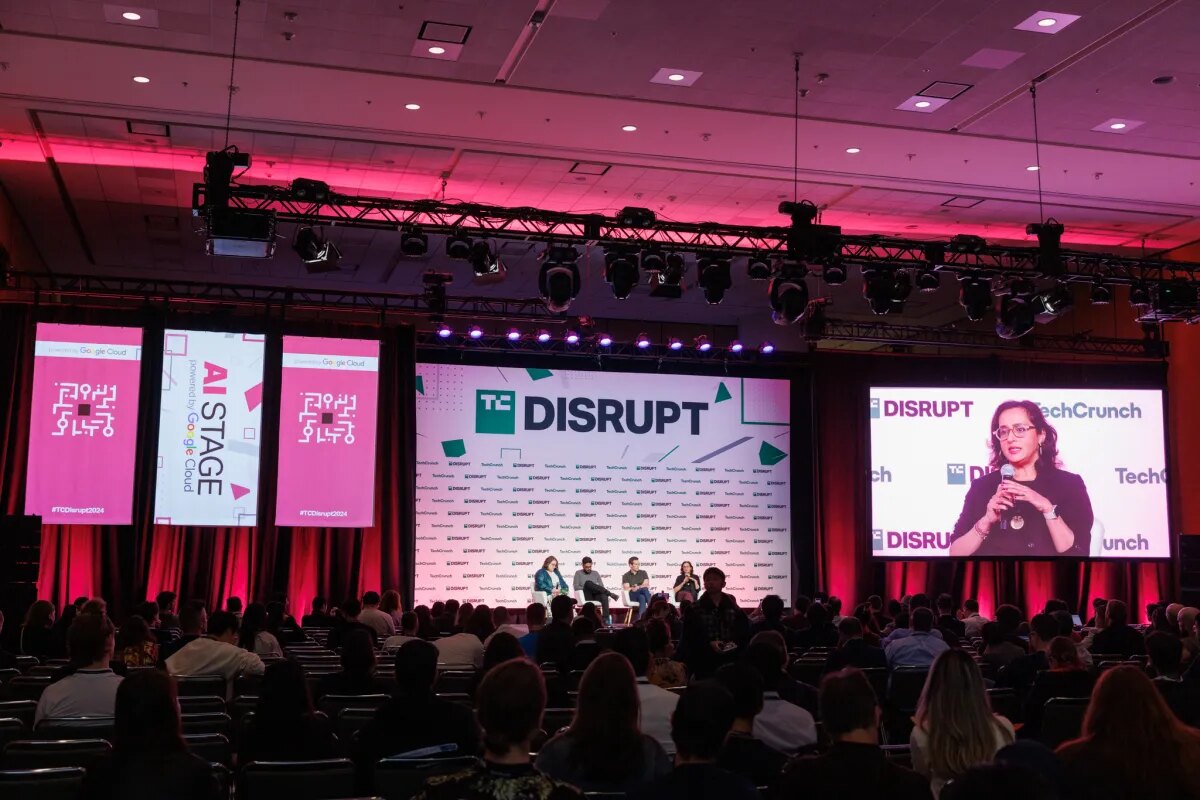
TechCrunch Disrupt 2026 will devote four sessions to decisions AI startups face over model selection, ownership and infrastructure. The event takes place October 13–15 at Moscone West in San Francisco and is expected to bring together more than 10,000 founders, investors, operators and technology leaders, alongside 250+ speakers and 300+ exhibiting startups.
The programme frames model choice as an evolving architecture decision rather than a permanent commitment. Startups may use frontier APIs, customize open-weight models, assign different tasks to several models, or build more of their own stack. Those choices affect operating costs, product design, control and the ability to adopt newer capabilities.
Multi-model products and the ownership question
On the Builder’s Stage, “The Real Tokenmaxxing: How the Best AI Companies Navigate a Multi-Model World” will feature Mo Jomaa of CapitalG, Vipul Ved Prakash of Together AI and Zuzanna Stamirowska of Pathway. The discussion will consider why companies use multiple models, how they weigh cost, performance and flexibility, and circumstances in which open models can outperform proprietary alternatives.
That approach can let teams match a model to a particular job instead of designing an entire product around one provider or model family. It also introduces practical questions about which workloads should move as alternatives improve and which dependencies a company is prepared to retain.
Manos Koukoumidis, CEO and co-founder of Oumi, will address that ownership boundary in “Which AI Should Your Company Actually Deploy: Rent, Customize, or Build” on the Real World AI Stage. Using audience polls, startup scenarios and a practical framework, he will compare frontier APIs, customized open weights and owning AI outright, with three decision principles for architecture discussions.
Open weights, differentiation and infrastructure
Nader Khalil, Director of Developer Tech at Nvidia, and Sydney Sykes, Nvidia’s Global Head of VC Partnerships, will lead “Building AI Startups Worth Betting On” on the Builders Stage. Their session will examine current founder choices between frontier APIs and open-weight models, and how those options can influence product strategy, infrastructure requirements, costs and long-term differentiation.
The strategic context also includes platform exposure: the issues raised by AI startup platform protection challenges show why AI startups must consider how dependencies can shape control over their products and routes to market. A model decision can determine not only technical performance, but also the extent to which a company can create features that competitors cannot easily reproduce.
When model decisions reach the chip layer
Anna Goldie, founder and CEO of Ricursive Intelligence, and founder and CTO Azalia Mirhoseini will take the Disrupt Stage for “When AI Starts Designing Its Own Hardware.” They will discuss AI optimization of chips and hardware, the closer relationship between model architecture and hardware design, and what a more open AI ecosystem could mean for the infrastructure underneath it.
For businesses evaluating their AI roadmaps, the practical implication is to treat model choice, customization and infrastructure as connected decisions. Preserving the ability to move workloads among models may matter as much as selecting the strongest option available today, while the cost and capability of the underlying hardware continue to change.