


AMD agrees $8.2bn acquisition of World Labs
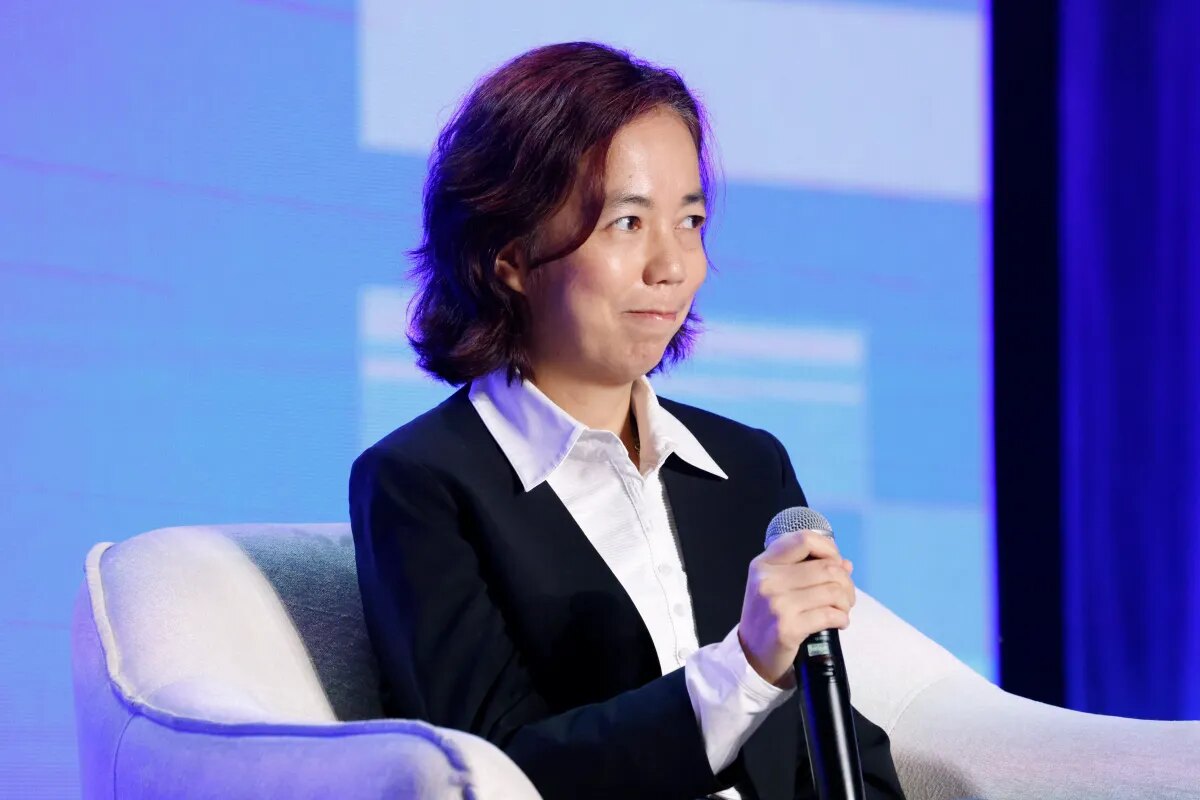
AMD has agreed to acquire World Labs for $8.2 billion, bringing founder Fei-Fei Li to the chipmaker as executive vice president and chief scientist. The transaction is expected to close before the end of the year, subject to regulatory approval.
World Labs, founded by Li in 2024, develops deep learning models designed to understand physical reality. The company said AI development requires close collaboration across model research, systems and compute, while AMD said frontier workloads such as those developed by World Labs will help shape its chip-making roadmap.
A closer link between models and compute
The companies had already built ties through an inference optimization and training partnership formed last year. Li also appeared at AMD’s CES presentation earlier this year. In announcing the acquisition, Li said World Labs wanted to scale its technical breakthroughs beyond the lab by widening its reach and getting closer to hardware.
Li is a Stanford computer science professor and a prominent AI researcher, particularly in computer vision. She helped pioneer the ImageNet database and its subsequent challenges. Her work at World Labs is based on the view that more capable AI needs grounding in physics and an ability to understand and reason about data beyond text.
World models and robotics
The term “world model” covers a broad range of systems, from language models that understand visual inputs to models that can generate and maintain high-fidelity simulations of reality. The scope of the technology was already unsettled, as differing plans for world models showed differing plans for world models, and the acquisition now puts that work closer to AMD’s hardware strategy.
World Labs’ first product, Marble, is positioned for entertainment experiences and for building simulated environments used in robot training. Such systems may be relevant where real-world training data for general-purpose robots is scarce and synthetic data is needed for development.
Competitive implications for AMD
The deal is likely to support AMD’s effort to compete with Nvidia in AI-specific chips and the surrounding software and model ecosystem. Nvidia already offers open-weight world models under its Cosmos suite, whereas AMD has publicly offered text- and video-based models.
World models are viewed as important for deploying generative AI on robotic platforms, including autonomous vehicles, industrial robots and general-purpose humanoids. For businesses planning robotics or simulation workloads, the practical implication is to assess how model capabilities, synthetic-data pipelines and underlying compute platforms evolve together as this transaction moves toward closing.