


Anthro Energy begins work on Kentucky battery electrolyte factory
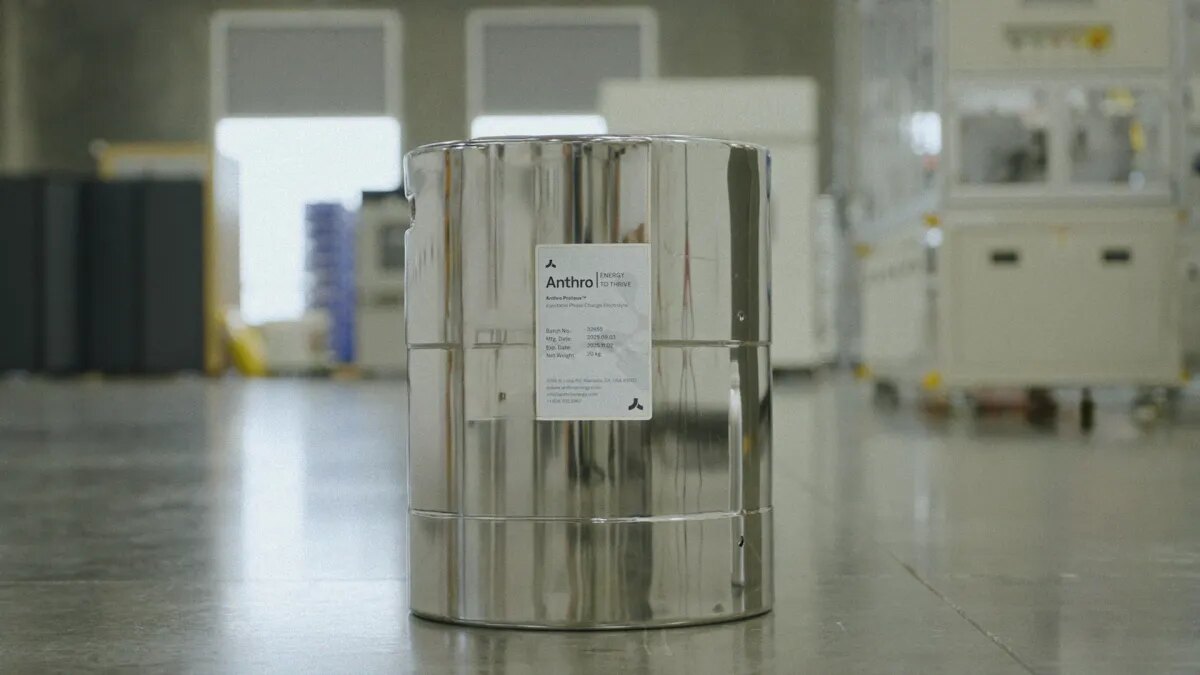
Anthro Energy has broken ground on a battery-materials factory in Louisville, Kentucky, designed to produce 25 gigawatt-hours of electrolytes annually—enough material for more than 300,000 electric vehicles. The startup expects the plant to begin production in 2028 and says it will serve domestic, high-specification battery customers.
The project is backed by a $24.9 million Department of Energy award made under the Bipartisan Infrastructure Law, as well as $18.4 million in investment tax credits through the Inflation Reduction Act. Kentucky has also offered $2.3 million in tax incentives tied to the creation of 110 permanent jobs.
A domestic electrolyte supply target
Anthro Energy is positioning the facility as part of a U.S. battery supply chain seeking materials free of foreign-entity-of-concern constraints. CEO and co-founder David Mackanic said the company aims to provide a domestic, China-free electrolyte supply for an emerging group of battery manufacturers.
Louisville was selected in part for its proximity to battery production. Mackanic said that 70% of battery production facilities currently operating in the United States are reachable within a 12-hour drive. That location could matter for manufacturers that need reliable material supply as they expand cell production.
Proteus and the solid-state battery challenge
The factory will be configured to make a range of electrolytes. Anthro initially plans to produce formulations used by other companies, while seeking to shift more capacity over time to its own polymer electrolyte, Proteus, after customers validate the material.
Proteus is intended for solid-state and semi-solid-state batteries. In Anthro’s process, the electrolyte flows into a cell as a liquid, allowing it to penetrate the anode and cathode in a manner similar to current liquid electrolytes. It then firms up, effectively binding the two battery components together.
Mackanic said the resulting cell can be flexible and, depending on formulation, 10 to 15 times stronger than a cell using a liquid electrolyte. Solid-state designs are expected to increase energy density and reduce fire risk by removing flammable electrolytes. A solid barrier between the anode and cathode can also prevent dendrites, spiky growths that can cause short circuits.
Scaling remains the central test
Despite those potential benefits, solid-state batteries have not yet achieved broad commercial scale because manufacturers have struggled to make durable cells cost-effectively. Anthro’s move from smaller-scale work to factory output therefore remains a critical transition for the company.
The federal award is intended to address the production-capacity problem that can prevent new battery materials from reaching large applications. For battery manufacturers, the practical implication is that the Louisville plant could add a domestic electrolyte option in 2028, but qualification of Anthro’s materials and execution at scale will determine its role in future EV, drone, and robotics supply chains.