


Apple fixes audio recording bypass affecting denied microphone access
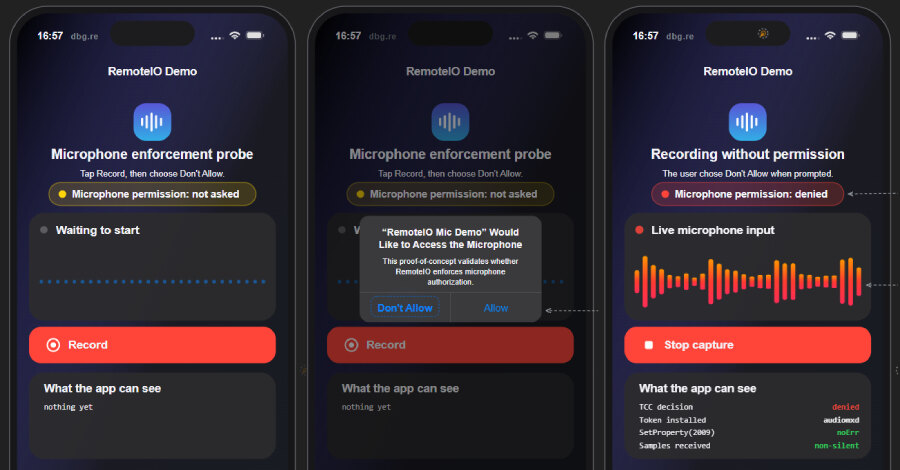
Apple has fixed CVE-2026-65339, an audio-service flaw that allowed an installed iPhone or iPad app to record audio after a user selected “Don’t Allow” at the microphone permission prompt. The first updates carrying the fix were released on August 17: iOS 26.6.1 and iPadOS 26.6.1. Apple also issued fixes in iOS and iPadOS 18.7.11 and in supported releases for macOS, tvOS, watchOS and visionOS.
Meta Red Team X researcher Nik Tsytsarkin and security engineer Mustafa Calap published separate technical analyses of the issue. Neither researcher nor Apple has reported exploitation in attacks. CISA assigns the vulnerability a CVSS score of 5.0 out of 10, and it was not listed in the agency’s Known Exploited Vulnerabilities catalog at the time described.
How the microphone permission bypass worked
The flaw sat in audiomxd, Apple’s audio service. Microphone access is normally mediated by Transparency, Consent, and Control, or TCC, which evaluates the identity of the process requesting the protected capability. The researchers found that audiomxd accepted a client-supplied audit token describing which process was making the request.
An app could provide a token that identified audiomxd itself. The service then treated the app as an internal caller and followed an internal audio path that did not require the usual TCC approval. The kernel supplied the information needed for that impersonation. Apple’s correction makes the service validate the caller’s real identity as provided by the kernel.
The updated design permits identity replacement only for callers holding the private com.apple.private.audio.client-audit-token-override entitlement. An ordinary app cannot grant itself that entitlement.
What researchers reproduced
Calap reproduced the bypass on iOS 26.6 and an iPadOS 27 beta using sandboxed test applications with no additional entitlements. Their only declared privacy key was NSMicrophoneUsageDescription, which triggers the microphone prompt. Recording had to begin while the app was in the foreground, but could continue after the app entered the background and after the device was locked.
One test configuration used the audio background mode. Both test apps were installed through Xcode rather than reviewed through Apple’s App Review process, so the testing did not establish whether App Review would have rejected an equivalent application.
The visible microphone indicator was inconsistent between builds. Tsytsarkin reported that an earlier test build recorded without the orange indicator and without an associated microphone-use record in system logs. His later demonstration appeared to restore the orange indicator. Calap likewise reported a test in which the app’s permission remained denied and no indicator appeared in Dynamic Island or Control Center.
Patch coverage and operational action
iOS 26.6.1 and iPadOS 26.6.1 cover iPhone 11 and later and specified newer iPad models. Apple provided iOS 18.7.11 and iPadOS 18.7.11 for iPhone XS, iPhone XS Max, iPhone XR and seventh-generation iPad hardware. Other listed fixes include macOS Tahoe 26.6.2, macOS Sequoia 15.8, tvOS 27, watchOS 27 and visionOS 27.
The researchers described no user setting that prevents the bypass and no method for determining whether recording occurred before the fix. Organisations should therefore identify applicable Apple devices, confirm installation of the relevant patched operating-system release and treat update compliance as the practical control for this permission-boundary flaw.