


Blackstone Backs AI Compute Financing Despite Neocloud Debt Concerns
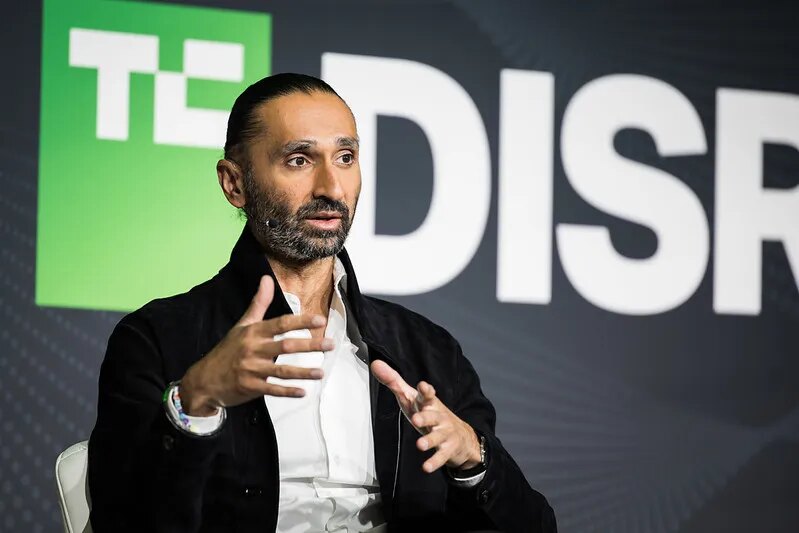
Blackstone is expanding its role in AI financing through Blackstone N1 (BXN1), its San Francisco-based hub for AI initiatives, while rejecting claims that the sector’s rising infrastructure debt could produce a broad credit crisis. Speaking at TechCrunch Disrupt, BXN1 leader Jas Khaira said the firm uses debt and equity across data centres, neoclouds, frontier models and applications.
The private-equity firm manages $1.3 trillion in assets and says it is the largest owner of compute outside the hyperscalers. Khaira said Blackstone differentiates itself from conventional venture investors through compute financing and flexible capital structures. Its activity includes a $5 billion commitment to Crux AI, a neocloud launched with Google to commercialise Google’s custom TPUs, and backing for chip startup Etched.
Customer contracts shape the financing model
Blackstone’s first major neocloud financing transaction was a $2.3 billion loan to CoreWeave in 2023, after demand accelerated following the launch of ChatGPT. Khaira said CoreWeave had about $30 million in revenue and minimal profitability when it sought the financing. The company borrowed against its Nvidia GPU fleet, while Nvidia was also an investor.
Blackstone also took confidence from CoreWeave’s contracts with blue-chip customers, including Microsoft. Khaira said the character of the customer is a primary underwriting consideration: where a client is investment grade, such as Microsoft or Meta, the risk is priced in relation to that customer. That transaction became a model for billions of dollars of follow-on debt raised by CoreWeave and rival neocloud operators.
Neoclouds rent AI GPU infrastructure to customers. Blackstone developed a structure that evaluates committed customer contracts and accepts GPUs as collateral, enabling large loans to venture-backed cloud providers. The firm later co-led, alongside Coatue, a $10 billion credit facility for Australian GPU provider Firmus.
Higher rates test valuations and debt capacity
Khaira acknowledged that concerns have increased as infrastructure companies accumulate debt. CoreWeave’s debt has grown to about $50 billion, while higher interest rates in September, hotter-than-expected inflation signals and a flow of AI infrastructure debt offerings have contributed to wider credit spreads. He said even Meta and Microsoft are facing a higher cost of capital.
Market pressure has also affected equity valuations. CoreWeave shares dropped more than 20% in recent days, and Firmus abandoned a planned Australian Securities Exchange listing that had sought a valuation of roughly $30 billion. Khaira said the market is determining the appropriate price for neocloud businesses while rates are rising.
Compute demand remains strong, but adoption returns vary
Khaira argued that the buildout differs from the banking risks of 2008 because the vast majority of data centres are being built for hyperscalers, which he described as the world’s most creditworthy companies. At the same time, he said AI companies still cannot obtain enough compute for their models, sustaining demand for new data-centre capacity.
Blackstone is also pursuing adoption through Ode with Anthropic, a $1.5 billion joint venture formed with Anthropic and Hellman & Friedman. Ode provides forward-deployed engineers to help companies integrate AI, initially across Blackstone’s 280 portfolio companies. Khaira said AI return on investment exists but is uneven, and adoption may follow a sawtooth pattern that can resemble excess compute before demand catches up.
For businesses assessing AI infrastructure, the practical implication is to examine contracted demand, the credit quality of end customers, collateral and refinancing costs together, while treating uneven adoption returns as part of the operating risk.