


CERT-In Warns of AI-Assisted Attacks and Backdoored ARTEX Deployments
CERT-In links AI-assisted intrusion activity to a wider ARTEX risk
India’s Computer Emergency Response Team, CERT-In, has warned that an AI-assisted threat actor it tracks as Crafty Falcon is actively targeting organizations in the country’s banking, financial services and insurance sector. The agency said the activity uses publicly available AI-driven offensive security tools including ARTEX, PentAGI, Cairn and CyberStrikeAI.
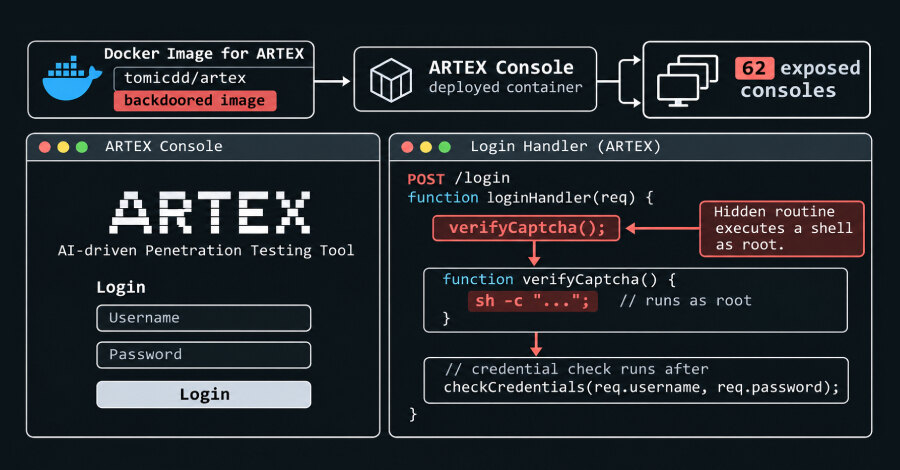
Separately, researchers identified 62 internet-facing ARTEX consoles serving a backdoored build between November 2 and 4, 2026. The first observed instance appeared on October 20, twelve days after the malicious Docker image was pushed. As of November 4, 1,645 hosts were serving the ARTEX console.
CERT-In said these tools can execute complete attack chains autonomously at machine speed, create and refine tailored scripts in rapid succession, and adapt payloads to target responses. The supporting infrastructure also rotates IP addresses within hours or days.
Financial services attacks focus on credentials and trusted paths
The campaign has affected cryptocurrency exchanges and digital asset service providers, leading to theft of keys and funds. CERT-In’s October alert had already described campaigns against non-banking financial companies, digital lending platforms, fintech firms, payment service providers and cryptocurrency wallet operators.
Attackers have exploited internet-facing applications, exposed APIs and privileged endpoints to obtain payment aggregator, payment gateway and partner-bank API credentials. They then invoke fund-transfer APIs from the victim organization’s own allow-listed infrastructure. CERT-In said that method can bypass controls around loan creation, KYC, sanctions, beneficiary checks, balance sufficiency and per-transaction limits.
Observed entry routes include stolen long-lived static API tokens, forged commits used to compromise source code repositories, plaintext credentials in configuration files or databases, and applications or remote services without multi-factor authentication. Operators also delete logs and tamper with endpoint security tools, while targeting cloud environments and publicly accessible non-production systems for credentials, tokens and network paths that can support a pivot into production.
A concealed root shell in a copied ARTEX image
The ARTEX developer removed the project repository from GitHub after reports that the tool had been abused in intrusions. Copies then appeared on GitHub and Docker Hub. Researcher Badbyte found that one GitHub copy changed a line in docker-compose.yml so installations pulled the tomicdd/artex image from Docker Hub.
The modified image added a hidden verifyCaptcha() routine to the login handler. When the CAPTCHA field begins with a secret marker, the request is processed through sh -c as root and returns output before any credential validation. Badbyte described this as an unauthenticated root shell that would not be apparent in a normal code review.
Docker Hub reported 9,000 downloads of the image. CERT-In’s warning and the ARTEX findings show why organizations should inventory exposed consoles, remove unvetted images, rotate potentially exposed credentials, require MFA for administrative access and place human approval around consequential AI-agent actions.
For financial and security teams, the practical implication is clear: treat offensive automation platforms and their container images as high-risk infrastructure, validate their provenance before deployment, and monitor them as closely as systems that can directly access production networks or payment APIs.