


Idaho National Laboratory Reviews Security Risks of Chinese Lidar
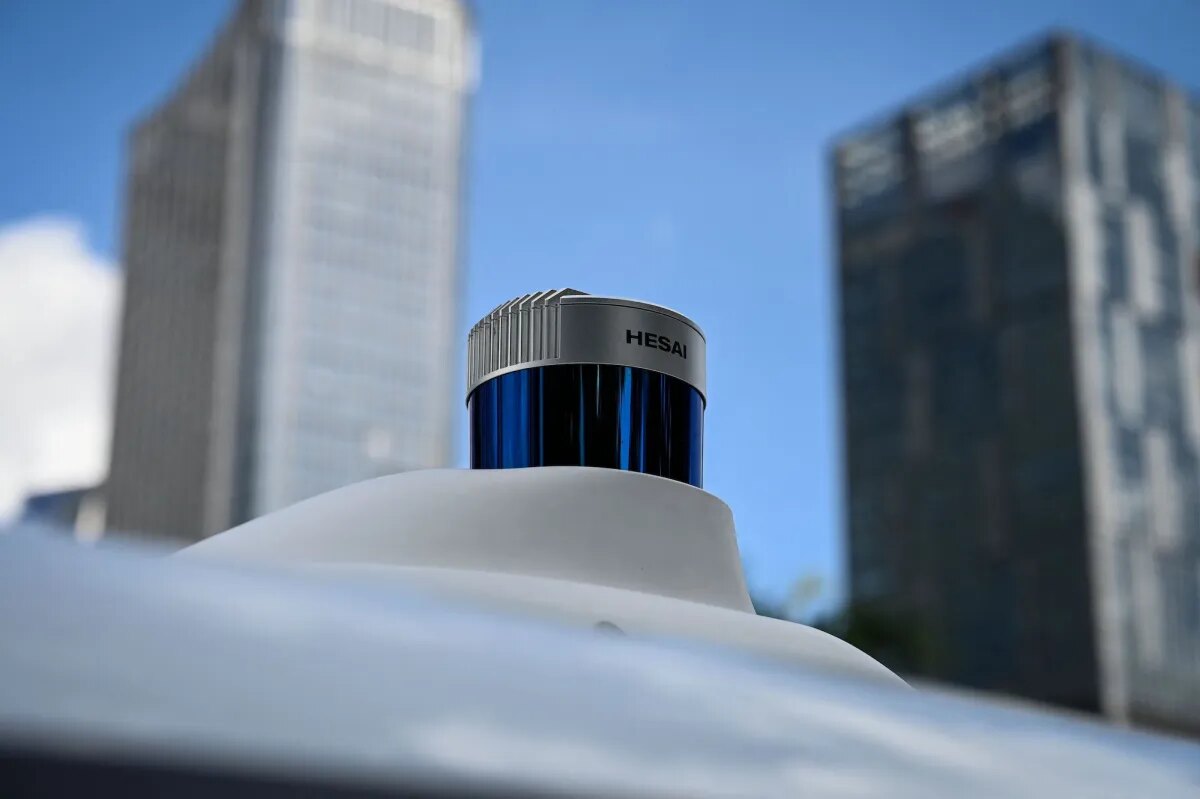
Idaho National Laboratory, a US Department of Energy laboratory, is investigating whether Chinese lidar sensors could pose security risks if they become widely used in vehicles in the United States. Two people familiar with the effort told TechCrunch that the review is funded by a company or group of companies from the electric and autonomous-vehicle industries, although the backers have not been identified.
The laboratory declined to discuss the work. Representatives of Rivian, General Motors, Ford, Kodiak, Lucid Motors, Nuro and Uber said they were not aware of the review, while Nvidia, Zoox and Aurora did not answer questions about involvement. Chinese lidar suppliers Hesai and RoboSense also did not respond to requests for comment.
Security scrutiny meets lower sensor prices
Lidar, or light detection and ranging, uses laser pulses to calculate the distance to surrounding objects. It has been widely used in autonomous-vehicle development because it can provide a high-resolution view of a vehicle’s immediate environment. Yet its adoption has long been constrained by cost relative to radar and cameras.
That cost equation has changed sharply. Chinese suppliers including Hesai and RoboSense have scaled production and reduced prices for sensors that could cost as much as $75,000 a decade ago to a few hundred dollars in some cases. US lidar companies have struggled to match China’s scale and lower labour and capital costs; the sector has consolidated, and Luminar has filed for bankruptcy.
The lower prices have led US automakers and autonomous-vehicle operators to consider Chinese sensors for their vehicle suites. Rivian, which plans a version of its R2 SUV with lidar integrated into the roof, has been reported as one such company. Its chief executive RJ Scaringe told Reuters in March that Rivian was considering US lidar production using Chinese technology, potentially through a joint venture, although its chief financial officer later said the company had no plans to bring lidar development in-house.
Data, disruption and an unsettled policy outlook
Omer Keilaf, chief executive and co-founder of Israeli lidar company Innoviz, described supply-chain dependence as one risk when an original equipment manufacturer builds an autonomous-driving stack around Chinese sources. He also identified two cybersecurity concerns: sensors could potentially be disabled at scale, and detailed environmental data could be compressed and sent through a cellular chip.
The reported laboratory review is focused more directly on cybersecurity and may also assess whether Chinese-made lidar can be cleared in this area. The source material does not establish that widespread remote disabling is possible. It does note that researchers have disabled individual lidar sensors with lasers, and that Hesai customers saw autonomous vehicles stop working for a day in early 2024 after the company failed to account for the leap-year extra day.
Regulation remains uncertain. The Department of Defense has put Hesai and RoboSense on its 1260H list, a designation that restricts work with the US military over alleged support for the People’s Liberation Army. A Commerce Department rule introduced in 2025 bars Chinese-made connectivity hardware in US passenger cars, but does not prohibit lidar and other autonomous-vehicle sensors.
Legislators are pursuing further limits, citing risks of espionage, sensitive-data collection and system disruption. Sensor selection will therefore need to account not only for price and performance, but also for cyber-risk assessment, supply-chain resilience and an evolving compliance environment, including the ecosystem around premium robotaxi plans in Houston premium robotaxi plans in Houston.