


Cold Relic Links Two U.S. Breaches Through Stolen Cloud Data
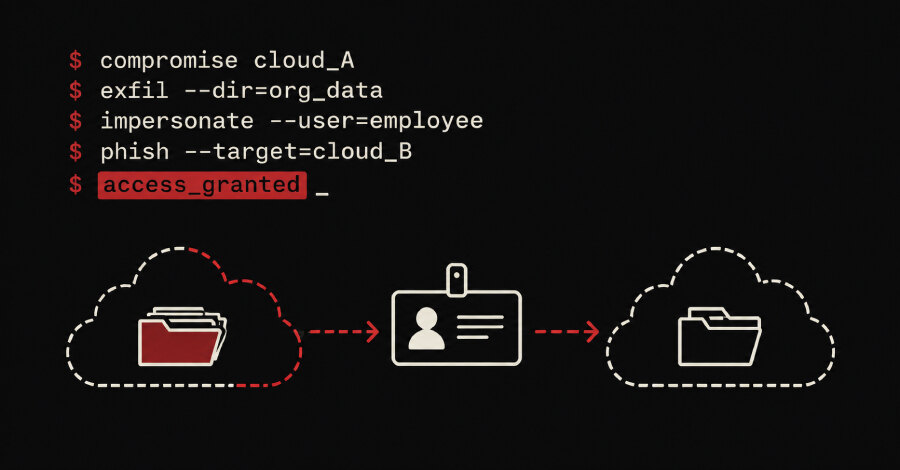
Google’s Mandiant and Threat Intelligence Group (GTIG) has described a 2026 intrusion in which the Russia-linked Cold Relic group used data, staff-directory information and identities stolen from one U.S. organization to breach a second. The first victim’s Google Workspace environment was compromised in late 2025; the second used Microsoft Entra ID as the federated single sign-on provider for Google Workspace.
Cold Relic, formerly tracked as COLDRIVER and UNC4057, is also known as Callisto, Gossamer Bear and Star Blizzard. Google said the group combines phishing and malware activity with cloud identity abuse, targeting information of potential strategic interest to the Russian government.
From Super Admin access to tenant-wide collection
Google said the first intrusion began through a residential proxy network located close to the victim. The attackers used stolen credentials for a Google Workspace Super Admin account and an MFA push-notification fatigue attack. After the victim accepted an MFA request, the group registered its own device in the tenant to retain access.
The operators also used passkeys and MFA backup codes as alternate routes into the account. With Super Admin privileges, they mass-shared files with a Cold Relic-controlled email account and downloaded files directly, obtaining the contents of the organization’s cloud storage drive.
Inside the tenant, the group accessed the Admin Console and queried security-investigation and email-audit logs to assess defensive visibility. It viewed, modified and deleted Alert Center notifications, then used Google Takeout to export employee lists and domain-wide data. The scale of cloud-account exposure fits the wider pattern of SaaS and identity risk outlined in SaaS and identity risk patterns as attackers seek durable access and reusable information.
Trusted identities became the phishing pretext
Google observed the attackers maintaining access for months after the mass theft. Activities included syncing mailboxes via OAuth to external email clients, using attacker-enrolled passkeys that remained valid across password and session resets, and searching cloud-drive material related to credentials, email archives and personnel information.
Even after removal from the first organization, Cold Relic impersonated its employees in messages to internal staff and people in the same professional circles. That information gave the group an apparently authentic basis for approaching the next target rather than relying on a generic phishing lure.
Federated sign-on extended the compromise
To compromise the second U.S. organization, the group impersonated an employee from the first victim in a secure messaging app. It sent phishing links presented as a document about a technical issue, seeking Microsoft Entra ID credentials and authentication tokens.
After successful authentication, Cold Relic registered a new MFA device in the SSO system and retained access to the user account. Google said the group then performed a bulk download of files accessible through that user’s cloud drive. The messaging profile was subsequently renamed to another persona, which Google suspects may have been used against further organizations in the same professional network.
For businesses, the incident means response to a cloud identity compromise should extend beyond password resets. Teams need to examine privileged-account activity, enrolled MFA methods, passkeys, OAuth connections, data exports, audit-log access and the partner contacts whose trust may be exploited after an intrusion.