


Destro Secures $8M for Warehouse Robot Orchestration
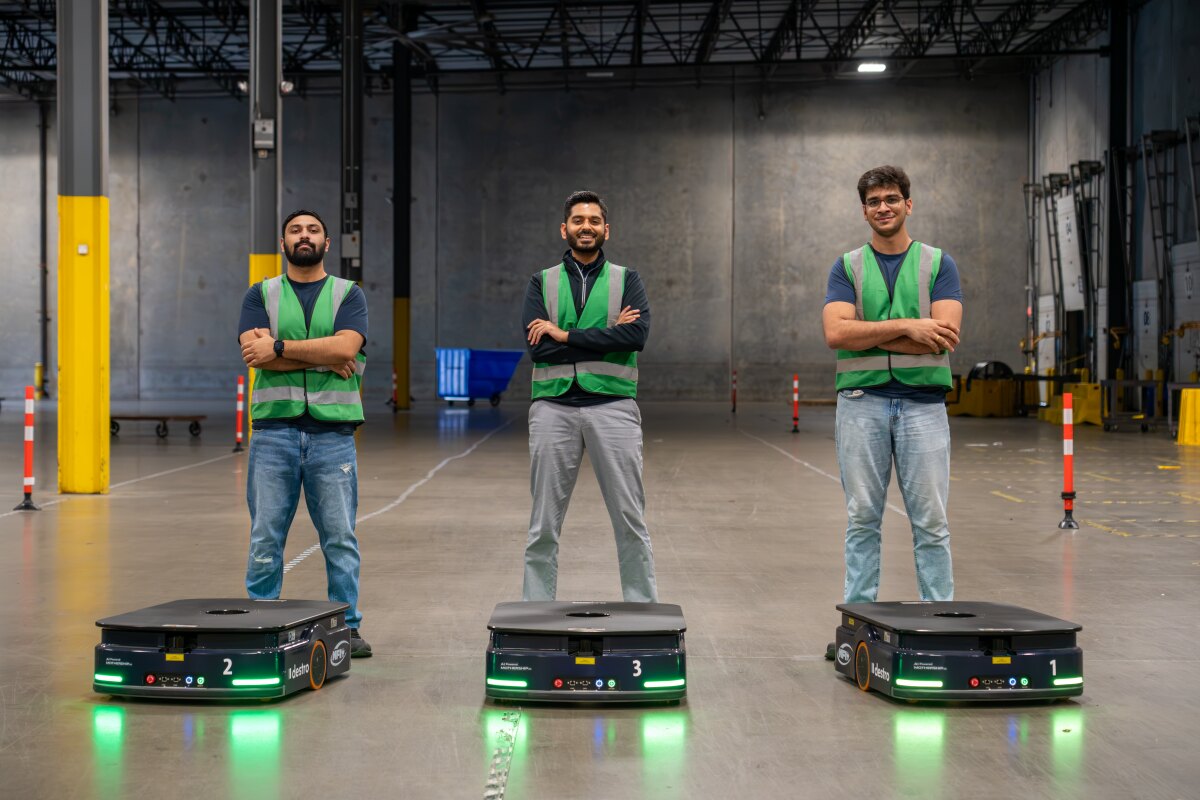
Destro has emerged from stealth with an $8 million seed round to expand an AI intelligence layer for logistics operations. The company is working with Yusen Logistics on cross-dock workflows, expanding an initial Pacific Northwest pilot to a 26-robot deployment and launching a separate 17-robot pilot at a Southern California facility.
Base10 Partners and Bonfire Ventures led the round, with additional investment from CoFound Partners. Destro’s approach differs from that of companies developing robot hardware: it aims to coordinate robots, human workers, carts and truck movements within an existing warehouse process.
Orchestration rather than a new robot
Destro began with picking and packing applications, then adapted its system after discussions with Yusen Logistics. Richard Brunelle, director of automation for the American logistics group, was seeking technology for cross-docking: unloading freight from an incoming truck and sorting it into mixed loads for trucks making final deliveries.
At the first Yusen pilot, three cart-moving robots from Miva Robotics operated through Destro’s Vision operating system. Vision is based on open-weight vision-language-action models, which use camera images and instructions to control robotic movement. Workers unload goods into different carts; the robots identify full carts and transport them to their assigned destinations.
Destro’s Mothership operating system is designed to direct the wider operation, including the people, carts and trucks involved. Brunelle said the arrangement makes the operation less labor-intensive and moves it away from paper processes by making the workflow systematic.
Fitting automation into the workflow
Yusen uses fixed automation such as conveyors and sorters across its US facilities, while also piloting technologies including trailer-unloading robots and autonomous floor scrubbers. Brunelle oversees automation across about 30 US facilities. Yusen’s UK subsidiary has built a fully autonomous facility, and the company is planning a similar effort in the United States.
Brunelle said Yusen had also evaluated two other well-known robot startups. One could move carts from point to point but did not handle loading or unloading, while another supplied fleet-management tools but left orchestration to a person. Destro was selected for its ability to apply autonomous direction across the full cross-dock process.
Limits and expansion plans
Destro plans to replicate the cross-dock workflow across warehouses with similar labor requirements. Founder Manthan Pawar said the company is building a complex operational harness around available robot platforms and AI models rather than treating any one robot as the product.
The model may face constraints in workflows that demand greater dexterity or object manipulation. Generic robot bodies and open-source models have not yet demonstrated broad capability in those tasks, and it remains uncertain whether builders of foundation models, dexterous hands or general-purpose humanoids will make their tools available to orchestration companies.
For logistics leaders, the practical implication is to evaluate automation by whether it improves the efficiency, consistency and flexibility of an end-to-end operation, including the coordination required between people and machines.