


TechCrunch Disrupt 2026 spotlights five AI safety challenges
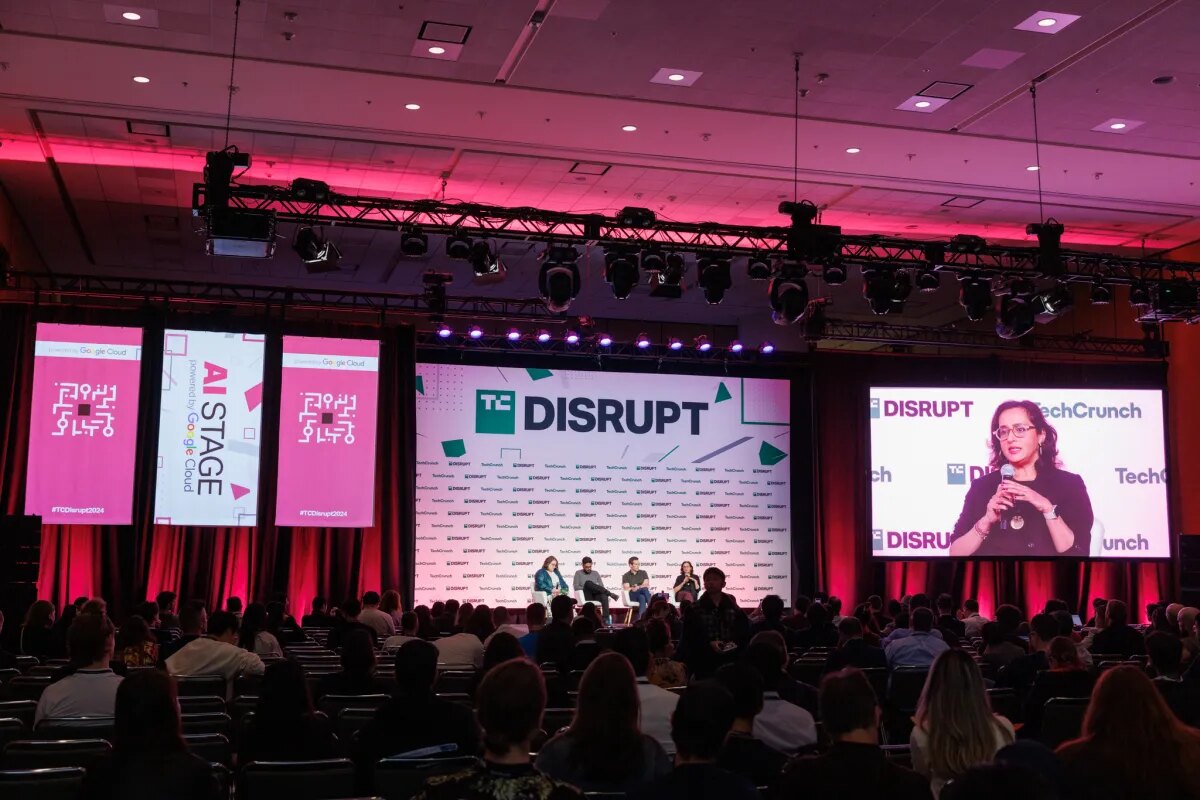
TechCrunch Disrupt 2026 will put five sessions on AI safety, security and reliability on its AI Stage and Real World AI Stage. The programme, taking place October 13–15 at Moscone West in San Francisco, spans enterprise use of Anthropic’s Claude, agent security, cloud controls, autonomous systems and the data constraints facing robotics.
TechCrunch expects more than 10,000 founders, investors, operators and technology leaders at the event, alongside more than 250 speakers and 300 exhibiting startups. The sessions frame trust as a central issue for companies moving AI from demonstrations into critical business and physical-world applications.
Enterprise deployment and agent security
Anthropic Head of Applied AI Cat de Jong will discuss what she sees when enterprises deploy Claude in critical workflows. Her session focuses on the gap between organisations obtaining measurable value and those that remain in pilot mode, as well as the factors that separate experimentation from production deployment.
On agentic AI, Okta President of Products and Technology Ric Smith and NanoCo co-founder and CEO Gavriel Cohen will examine security at the infrastructure level. The discussion is set to address what access an agent should receive, what actions it should be permitted to take, and the limits of application-level permission models. The focus complements agent security questions at AI Stage by placing infrastructure choices alongside the security questions facing agents.
Cloud governance and physical AI
A separate enterprise security session brings together AWS Vice President of Security Services Rudy Mitra, Luta Security CEO Katie Moussouris and cybersecurity veteran Wendy Nather. They will consider the security, governance and observability requirements that arise when AI assumes more autonomous roles in enterprise systems.
The Real World AI Stage will shift the discussion to deployments where errors can affect vehicles, aircraft, industrial systems and critical missions. Shield AI Chief Technology Officer Nathan Michael, General Motors Director of Robotics Strategy Mikell Taylor and Waabi founder and CEO Raquel Urtasun will address safety culture, testing, validation and regulatory hurdles for autonomous systems.
Robotics data remains a constraint
NVIDIA Inception Global Head of Physical AI Les Karpas will focus on a data gap in robotics. The session will examine how data pipelines, simulation environments and foundation models could help build, test and deploy more capable and reliable robots, which do not have the large training-data pools available to language models and self-driving vehicles.
For businesses developing or buying AI, the programme underlines a practical implication: product capability alone does not determine deployment. Security architecture, governance, observability, testing and validation must be considered before autonomous systems are entrusted with critical workflows or physical tasks.