


Fusion startups deepen defense ties through high-energy laser work
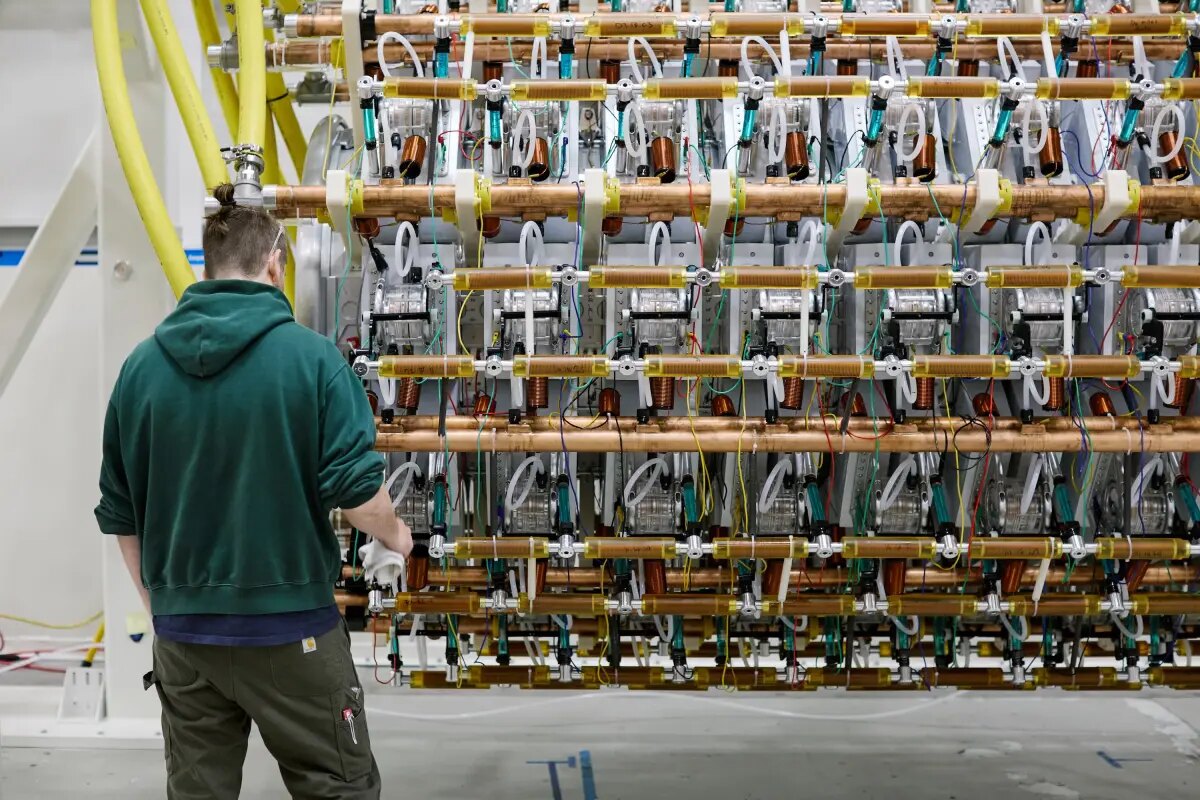
Laser-fusion startup Xcimer has announced a partnership with and investment from RTX, the conglomerate that includes defense contractor Raytheon. RTX Ventures will provide funding, while RTX will explore potential uses for Xcimer’s high-power laser technology beyond the company’s planned fusion power plant.
The agreement illustrates how fusion companies are finding new partners in the defense sector while pursuing their longer-term objective of putting electricity on the grid. Fusion projects are capital-intensive, and the article notes that climate-tech venture funding, a key source of backing for the sector, has stalled.
Laser technology connects power and defense programmes
Denver-based Xcimer says it operates Phoenix, the largest privately owned laser system in the world. Its reactor concept uses lasers to bombard fuel targets and compress them until atoms fuse and release energy. Phoenix operates at an order of magnitude less power than a commercial power plant would require, but it is already sufficiently powerful to attract defense interest.
Defense organizations have examined laser weapons for years, with attention increasing as drones reshape warfare. Conventional air-defense systems were designed for larger, less numerous crewed aircraft. The resulting economic mismatch can be stark: the article cites an example in which a US ally used a $3 million Patriot missile against a $200 consumer drone.
Laser weapons are intended to change that calculation. Rather than expending one missile for each engagement, they can fire rapidly using electricity supplied by a generator, a ship reactor or an engine. That overlap makes companies developing laser-driven fusion systems potential technology partners for defense contractors.
Pacific Fusion expands high-energy-density collaboration
Xcimer is not alone in engaging with national-security work. Pacific Fusion announced a memorandum of understanding with the National Nuclear Security Administration to cooperate on high-energy-density fusion experiments. The company has broken ground on a demonstration facility in New Mexico, near Sandia and Los Alamos National Laboratories.
The proposed facility is primarily intended to demonstrate that Pacific Fusion’s design can produce more power than it consumes. It could also support experiments whose fusion reactions are far more powerful than those now used by the government for nuclear-weapons research. Its development follows Pacific Fusion energy parity demonstration facility as the company advances a facility intended to test energy parity.
Pacific Fusion co-founder and CTO Keith LeChein said the facility has utility in a world-leading defense application, while co-founder and COO Carrie von Muench said defense applications had always been part of the company’s thinking. LeChein previously worked at Sandia National Laboratories, Lawrence Livermore National Laboratory and the NNSA.
Business implication
For fusion businesses, defense collaboration can provide another route to funding and early demand for high-power technologies, while the core power-generation programme remains the central test of commercial value.