


India sets CNAP caller-name display rule for 4G networks
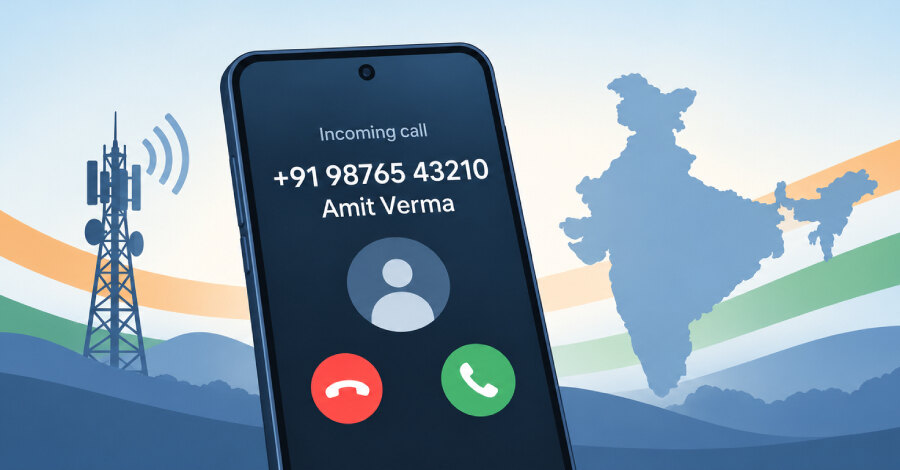
India’s Department of Telecommunications has directed telecom service providers to show a caller’s registered name alongside the incoming number on 4G and newer wireless networks from November 1, 2026. The Calling Name Presentation, or CNAP, requirement is intended to help users identify calls from unfamiliar numbers and address spam and fraudulent calling.
The Ministry of Communications set out the measure in an October 13, 2026 circular. Under CNAP, the caller identity is the name recorded for that subscriber in the originating telecommunications provider’s subscriber data record and is included with the calling-line identification presented to the recipient.
How caller names will be presented
The phone number remains the first field shown for an incoming call. The second field follows a defined order of preference. If the number is stored in the recipient’s contacts, the device will show the associated contact name. For an unsaved domestic number, it will display the calling name identity held in the telecom operator’s subscriber database.
Calls originating outside India will instead carry the label “International Call”. The directive is focused on wireless terrestrial networks using 4G and higher-generation technologies. CNAP for 2G and 3G networks and for public switched telephone networks will be considered separately after further examination.
Operator databases and privacy controls
Each originating telecom service provider must establish and maintain a database that maps subscriber names to phone numbers. When a call arrives, the receiving operator will query that database, retrieve the calling name identity and present it to the called user.
The Ministry also expects providers to adopt a secure-by-design implementation. The circular says the calling name identity must not be retained after the incoming call is complete. Providers must maintain service quality under applicable law and provision the database, network and connectivity infrastructure needed to process identity queries efficiently.
Telecom operators are additionally expected to offer Calling Line Identification Restriction, or CLIR, so a user can elect to hide their caller identity when placing a call. The circular therefore combines wider caller identification for ordinary incoming calls with a mechanism for subscribers to restrict the presentation of their own identity.
Rules for business and bulk connections
Users with business or bulk connections may choose a preferred name instead of the calling name identity. That name must be either a trademark registered to the user with the Trade Marks Registry under the Controller General of Patents, Designs and Trade Marks, or the user’s trade name as registered on the Goods and Services Tax portal.
For new connections, the preferred name must be recorded in both the customer application form and subscriber data record. The user must present original evidence of registration to the originating provider, which must attach true copies to the application form.
Businesses that rely on outbound calling should review the subscriber name held by their telecom provider, assess whether a qualifying preferred name is appropriate, and retain the required trademark or GST documentation before the November rollout.