


Jeff Lawson to examine Inertia fusion strategy at Disrupt 2026
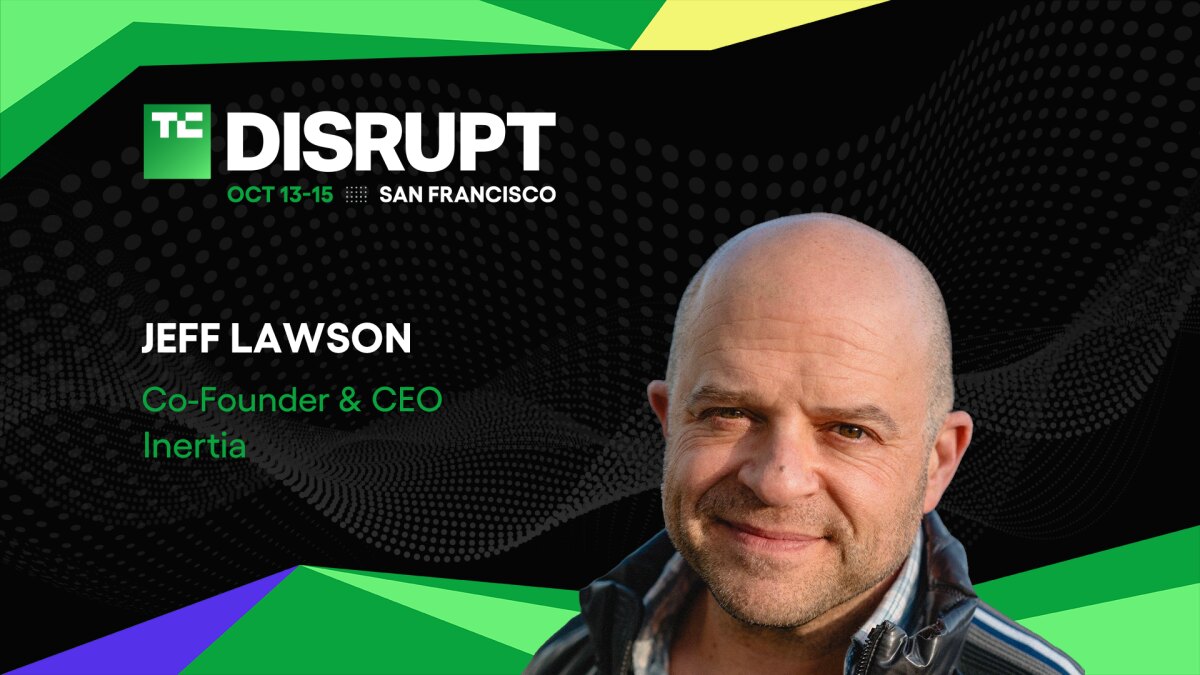
Jeff Lawson, the co-founder and chief executive of fusion company Inertia and a co-founder of Twilio, will take part in a TechCrunch Disrupt 2026 fireside chat on October 13–15 in San Francisco. The session, “How Twilio’s Founder Is Tackling the Power Problem,” will be held on the Smart Systems Stage at Moscone West.
The discussion follows a period of rapid expansion at Inertia. In February, the company announced a $450 million Series A led by Bessemer Venture Partners, with participation from GV and other investors. The capital is intended to support powerful laser systems and the mass manufacture of fusion fuel targets, both central to its aim of moving fusion science towards grid-scale energy.
From software scale to fusion engineering
Lawson helped build Twilio into a public company with more than $4 billion in revenue and 300,000 customers worldwide. His background also includes early product leadership at Amazon Web Services and the founding CTO role at StubHub. At Disrupt, the focus will be on how experience building software products, teams and companies can inform a capital-intensive deep-tech venture.
The premise is not that software methods transfer unchanged to fusion. Inertia’s work depends on lasers, manufacturing capacity, supply chains and engineering milestones as well as business execution. The conversation is set to address talent, timelines, fundraising and the difficult technical questions involved in pursuing an energy company with this profile.
Manufacturing capacity takes shape
In July, Inertia opened a 50,000-square-foot headquarters in Livermore, California. The site includes facilities for developing fuel-target manufacturing processes and laser technologies. The company also said it had recruited leaders from Apple, Corning and Waymo to build manufacturing and supply-chain capabilities.
That operational emphasis gives context to the $450 million financing: the company is not describing fusion solely as a laboratory challenge, but as work requiring repeatable production processes and industrial execution. The need to connect technical progress with commercial potential is also likely to be relevant to the founders and investors attending the event.
What the Disrupt session will examine
TechCrunch expects more than 10,000 founders, investors and technology decision-makers at Disrupt 2026, alongside more than 200 sessions led by 250-plus technology leaders. The programme’s infrastructure coverage includes climate and energy tracks, placing Inertia’s plans within a broader discussion of technology systems.
For attendees considering the event, the expiring discounted-pass window outlines the expiring discounted-pass window while this session offers a case study in the practical decisions behind a high-capital energy venture.
The business implication is clear: leaders moving into technically unfamiliar, capital-intensive markets need to match ambitious missions with specialist teams, credible milestones and manufacturing plans that investors and operators can assess.