


Jill Lepore Examines Silicon Valley’s Vision of an Artificial State
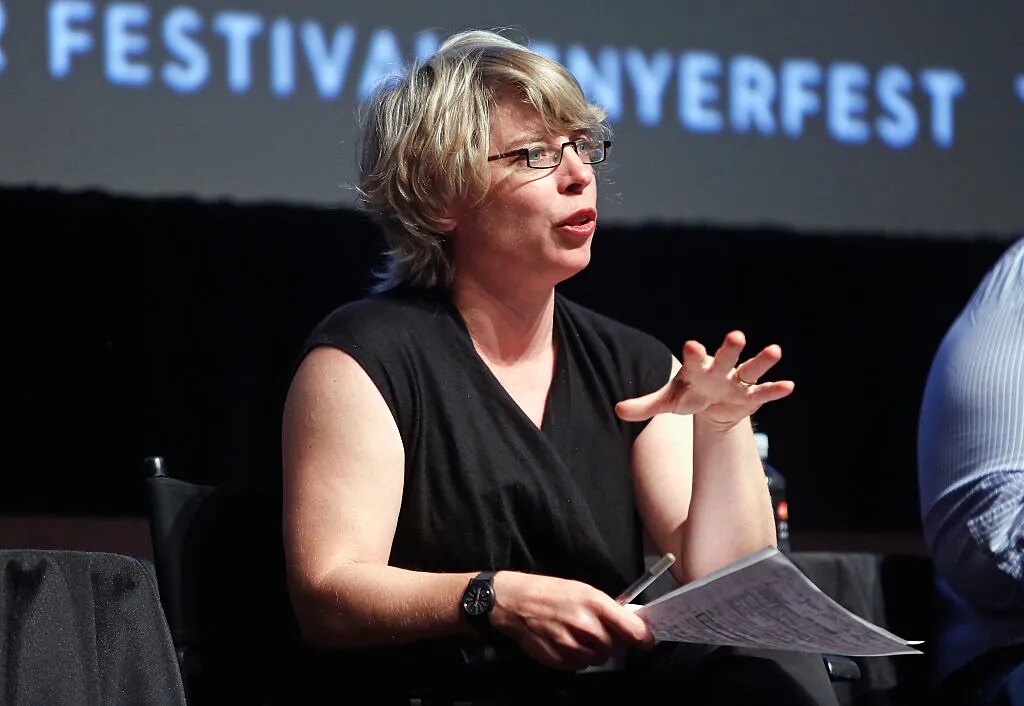
Harvard historian and The New Yorker staff writer Jill Lepore argues that technology companies are increasingly taking on functions associated with democratic government. In her forthcoming book, The Rise and Fall of the Artificial State, she describes an “artificial state” as both a political construct and an idea: government by machines that displaces the liberal democratic nation-state.
Speaking on TechCrunch’s Equity podcast, Lepore said the shift amounts to “a return to tyranny and mystification in the form of rule by algorithms, corporations, machines.” Her criticism is not directed at technology itself, she stressed, but at private corporations assuming public functions without public consent.
Technology is not the central target
Lepore separates technological invention from the political philosophies and corporate arrangements surrounding it. She said many attempts to introduce technology into government began with goals such as efficiency, speed and lower cost. In her account, decisions made over the past 20 to 25 years have increasingly become a deliberate challenge to the role of the nation-state, a position voiced by prominent entrepreneurs who want to move beyond it.
She points to the 1990s debate over the internet’s future and to the 1996 Telecommunications Act as a consequential political choice that has proved difficult to revisit. Apple’s 1984 Macintosh campaign also represented personal computing as liberation from the totalitarian image of mainframe systems. Lepore characterises that as clever advertising rather than evidence that a personal computer would improve citizenship or civil society.
Platforms, representation and public authority
The historian uses Twitter’s political evolution to illustrate how commercial platforms can acquire democratic language and influence. Twitter did not begin by claiming it would save democracy, she said, but political campaigns and officials used it to amplify messages and reach audiences. By 2012, the company published its Twitter Politics and Elections Handbook and promoted the idea of a town hall in a pocket.
Lepore disputes that description. At the time, she said, one in five Americans had a Twitter account, most account holders had never used it, and more than 90% of political tweets were posted by fewer than 10% of the people who used the service frequently. That made the platform a poor representation of the electorate and a potentially misleading signal for politicians attempting to gauge public opinion.
Science-fiction warnings and local scrutiny
The book traces a longer literary tradition in which increasingly capable machines take over human and governmental functions. Lepore cites E. M. Forster’s 1909 story The Machine Stops, which imagines people isolated in rooms while a machine provides everything they need. She argues that some Silicon Valley leaders treat warning or ambivalent fiction as a blueprint rather than engaging with its political implications.
For Lepore, the practical response is democratic consultation rather than a simple rejection of technology. She points to local disputes over data centres, where residents seek answers on energy costs, water consumption, employment and environmental effects. Businesses pursuing AI systems or data infrastructure should therefore treat technical efficiency as only one consideration and build decisions around informed public participation and durable accountability.