


Operation Endgame disrupts Gootloader, CastleRAT and StealC
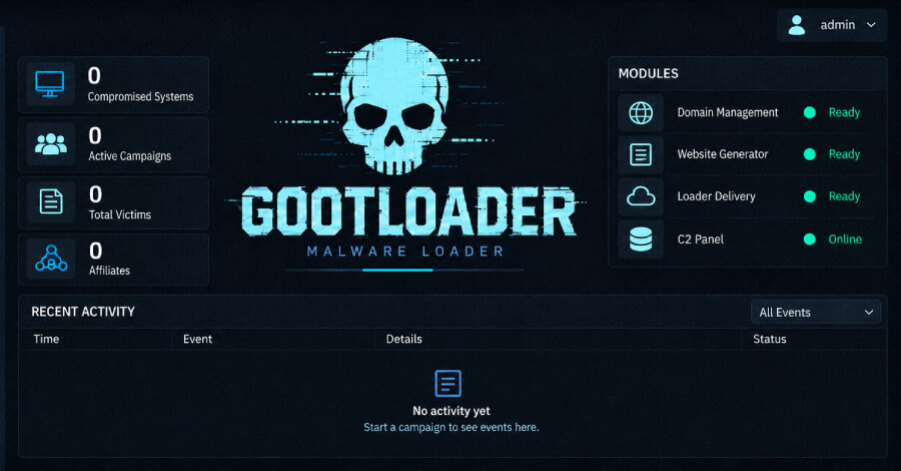
An international Operation Endgame action has disrupted infrastructure used by the Gootloader, CastleRAT and StealC malware families, while authorities seized about 6.4 million stolen login records connected to more than 40,000 victims. Germany’s Federal Criminal Police Office, the BKA, said the campaign targeted tools used to gain access to computers, steal credentials and support ransomware activity.
Europol, which supported the operation, reported the seizure of 235 servers and 257 domains across the three malware operations. No arrests were announced in connection with this week’s action, although Dutch police said further investigations had targeted Gootloader’s main suspect.
Infrastructure losses across three malware operations
Gootloader is a loader that can download further malware after infecting a device, particularly ransomware. It was distributed through fake legal documents hosted on compromised websites, often WordPress sites, with SEO poisoning used to elevate those pages in search results.
The U.S. Justice Department said Gootloader had infected at least 25,000 computers worldwide since 2018. Operators used compromised devices to infect further systems and sold access to ransomware actors. In the United States, the malware was used in ransomware attacks against at least 44 victims, with losses of about $28.8 million. The BKA said its current findings point to millions of infections worldwide since Gootloader first emerged in 2020.
Authorities took down 14 Gootloader servers and 218 domains, and removed malware from 681 compromised websites. With court approval, U.S. agencies and international partners also removed Gootloader from more than 100 servers, including hacked WordPress sites, and seized U.S. domains used for malware delivery and command-and-control activity.
CastleRAT, a remote-access trojan known since 2025, gives attackers remote control of infected computers. Police seized 120 servers and 39 domains associated with the malware. StealC, an infostealer that extracts passwords and other login data, was disrupted again after a June action. German police said its operators changed infrastructure after that earlier disruption and returned online; some key infrastructure ran on Virtualine/Omegatech, a bulletproof hosting provider shut down in a late-October takedown.
Stolen credentials remain a live risk
Taking servers and data does not mean that credentials already copied by criminals have become safe. Police warned that attackers may still possess the stolen logins, and an infected computer can continue exposing passwords while malware remains installed.
Dutch police have placed CastleRAT-related data in the Check your hack service, where individuals can submit a single email address and receive removal guidance if it appears in the dataset. Data is also being shared with Have I Been Pwned and the Shadowserver Foundation. The service does not check whole domains; organisations can participate in the No More Leaks project, which shares data with private partners.
Authorities stressed that messages claiming to be police emails with links to check stolen data are fraudulent. The Shadowserver Foundation is working with internet service providers and CSIRTs to identify infected systems and alert owners, while Germany’s Federal Office for Information Security is helping the BKA notify victims.
Actions for WordPress site owners
Denmark’s National Special Crime Unit helped remediate the 681 compromised sites. It said the attackers were believed to have entered with stolen passwords obtained through criminal channels, installed a backdoor, and then used the sites in the operation. Officers removed malicious code and access, leaving owners advice on securing their installations.
- Change every administrator password to a unique password of at least 12 characters.
- Enable multi-factor authentication and remove unrecognised accounts.
- Remove backdoor code and update WordPress, themes and plugins.
- Restrict access to the /wp-admin login page to IP addresses used by authorised devices.
For businesses, the practical implication is to treat exposed credentials and compromised web properties as continuing incidents: reset access, eradicate persistence, update affected systems and limit administrative entry points before attackers can reuse them.