


Poseidon Aerospace Secures $60M for Uncrewed Cargo Aircraft
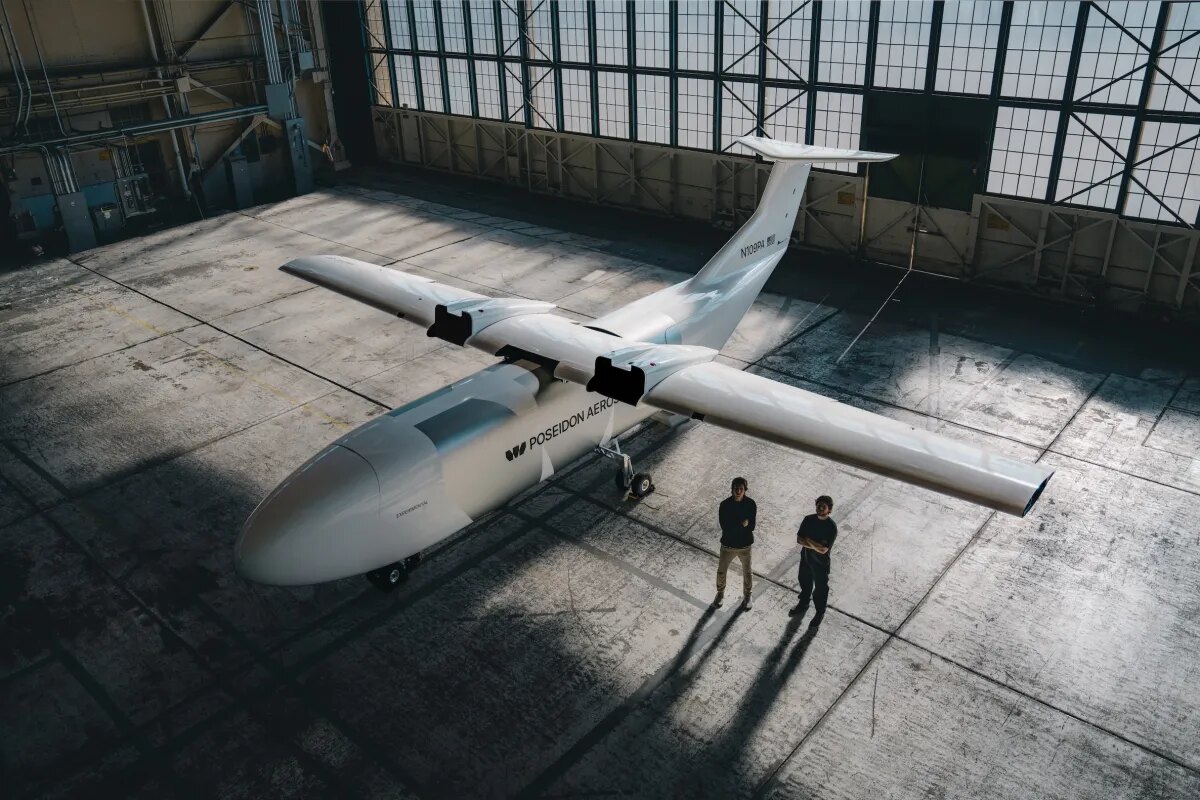
Poseidon Aerospace has raised a $60 million Series A ahead of the planned first uncrewed test flight of its Egret cargo aircraft by the end of the year. The round was led by TQ Ventures, with new investments from Hanwha Asset Management, G Squared and JAWS. Existing investors Starship Ventures, Draper Associates and Drover Ventures also participated.
The financing follows an $11 million seed round completed last year. Poseidon, founded by CEO David Zagaynov and Parker Tenney, is expanding into an old Navy hangar in Alameda, California, and plans to hire as it develops the full-size aircraft.
A fixed-wing approach to autonomous freight
Egret is a fixed-wing, combustion-powered cargo aircraft with a 50-foot wingspan. Poseidon is also developing a seaplane variant called Heron. Last year, the company developed and flew a quarter-scale vehicle named Seagull before moving toward the full-size design.
The startup is adopting autonomy and remote piloting, but is deliberately not pursuing vertical takeoff and landing technology, hydrogen propulsion or an electric powertrain. Zagaynov described the company’s objective as lowering the cost of moving cargo, rather than introducing technology for its own sake.
Removing the cockpit and life-support systems is intended to reduce structural weight. Zagaynov said that could improve the payload-to-empty-weight ratio and enable lighter, more efficient engines. He also argued that aircraft without onboard pilots can achieve higher utilisation because routes do not need to be planned around pilot duty limits, relief crews or overnight stays.
Defense access and regional cargo operations
Poseidon initially aims at defense and regional commercial cargo. For defense customers, it is designing aircraft for remote communities and underserved routes where air cargo is constrained, including locations with degraded or nonexistent infrastructure. The company says those capabilities can make logistics harder to disrupt and more resilient to adversary denial.
In commercial operations, Poseidon does not plan to sell its aircraft. Instead, it intends to operate a regional air-cargo business and compete with existing carriers for work from UPS, FedEx and other customers. Zagaynov said autonomy could also make it easier to shift capacity when demand rises in a particular region, without relying on a locally based pilot pool.
A route to commercial operations
Poseidon sees scope for more point-to-point cargo flights rather than a conventional hub-and-spoke network. Its plans arrive as the Federal Aviation Administration runs a pilot programme intended to ease testing for electric vertical takeoff and landing startups. Poseidon is not building an eVTOL aircraft, but Zagaynov said the broader regulatory environment provides a path to commercialisation that was less available five to ten years ago.
For freight businesses, Poseidon’s programme is a reminder that autonomous aviation is being developed not only as an aircraft product, but also as an operating model. Its commercial value will depend on whether lower operating constraints translate into reliable service on difficult and regional cargo routes.