


Reliable Robotics tops $1 billion valuation with $115 million extension
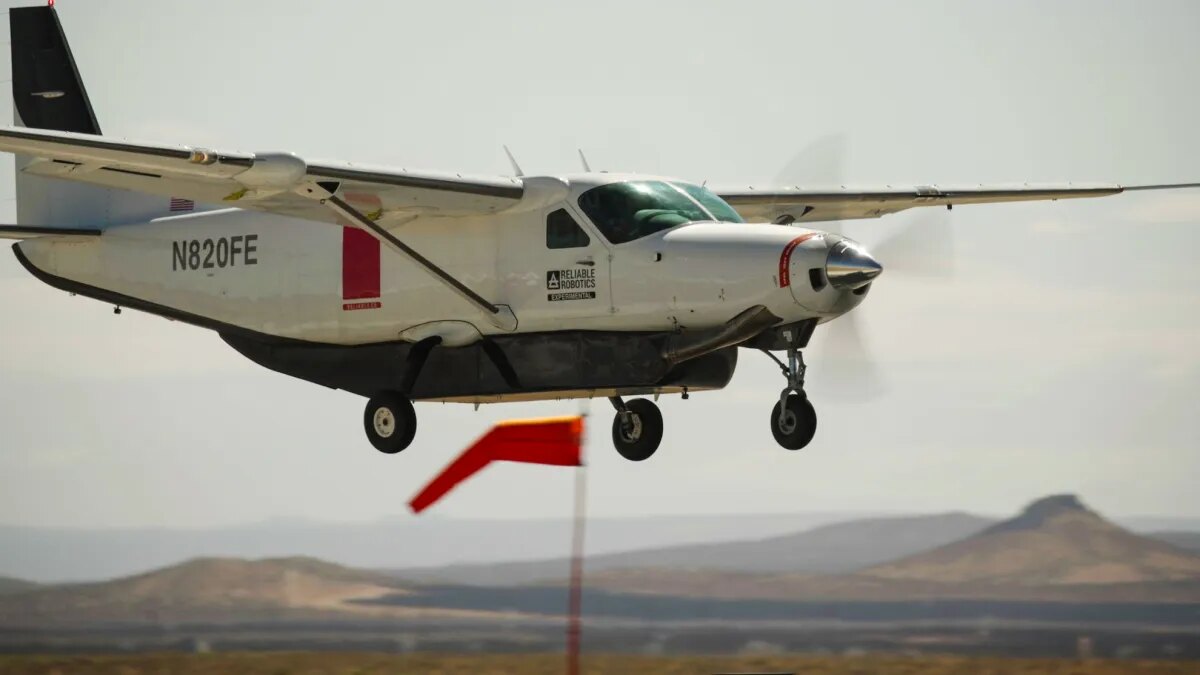
Reliable Robotics has raised a $115 million extension to its Series D financing, bringing the round to $275 million and valuing the autonomous aviation company at more than $1 billion. The Mountain View, California-based company said it has raised $380 million in total as it works to obtain Federal Aviation Administration certification for systems designed to be installed on existing aircraft.
The extension comprises $90 million in equity led by Nimble Partners and $25 million in debt from Silicon Valley Bank. Other investors named by the company include Gideon Strategic Partners, RockCreek, Geek Ventures, Gold Hill Capital and Sparkwave Capital.
Certification is the central milestone
Reliable Robotics is developing autonomous flight technology for conventional aircraft, with FAA certification forming the key constraint on commercial deployment. Co-founder and chief executive Robert Rose said the company is continuing to submit evidence to the regulator as it advances through that process.
Its first product is called continuous autopilot engagement. The system is intended to handle engine start, taxiing, takeoff and landing, while a pilot remains in the aircraft and interacts with the autonomous flight system through a touchscreen. Rose expects certification for this first system within 18 to 24 months.
A subsequent certification would move the pilot from the cockpit to a ground-control station. Rose said that step is at least three years away. The company’s approach is therefore not centred on producing a single new aircraft, but on a system that can be adopted across airframes.
Radar and airline operations broaden the programme
Reliable is also seeking certification for an in-house collision-avoidance radar. After legacy suppliers did not take on the project, the company developed a solid-state design with no moving parts. Rose said it scans at longer range and with higher resolution than conventional systems that use a moving antenna, and can operate on the ground to help prevent collisions with aircraft or infrastructure.
The company expects certification of the solid-state radar by the end of 2027. Its fourth certification track concerns Reliable Airlines, an Albuquerque-based carrier intended to become the first airline certified to use the autonomous technology. The airline flies cargo six days a week with six Cessna Caravans, while equipment and airline operations are certified under separate FAA regulations.
What the funding supports
Rose previously led flight software at SpaceX and also worked at Tesla and Google; co-founder and chief technology officer Juerg Frefel also spent nearly a decade at SpaceX. Nimble Partners founder John Burbank described the opportunity as broader than building one aircraft because the system is designed for use by multiple airframes.
For aviation operators and technology suppliers, Reliable’s financing illustrates the practical requirement for autonomous flight programmes: capital must support hardware development, regulator-facing evidence and real airline operations in parallel. Approval timelines remain long, but each certification track determines how and when the technology can move into service.