


SpaceX Sets September 22 Test for Starship’s First Orbital Mission
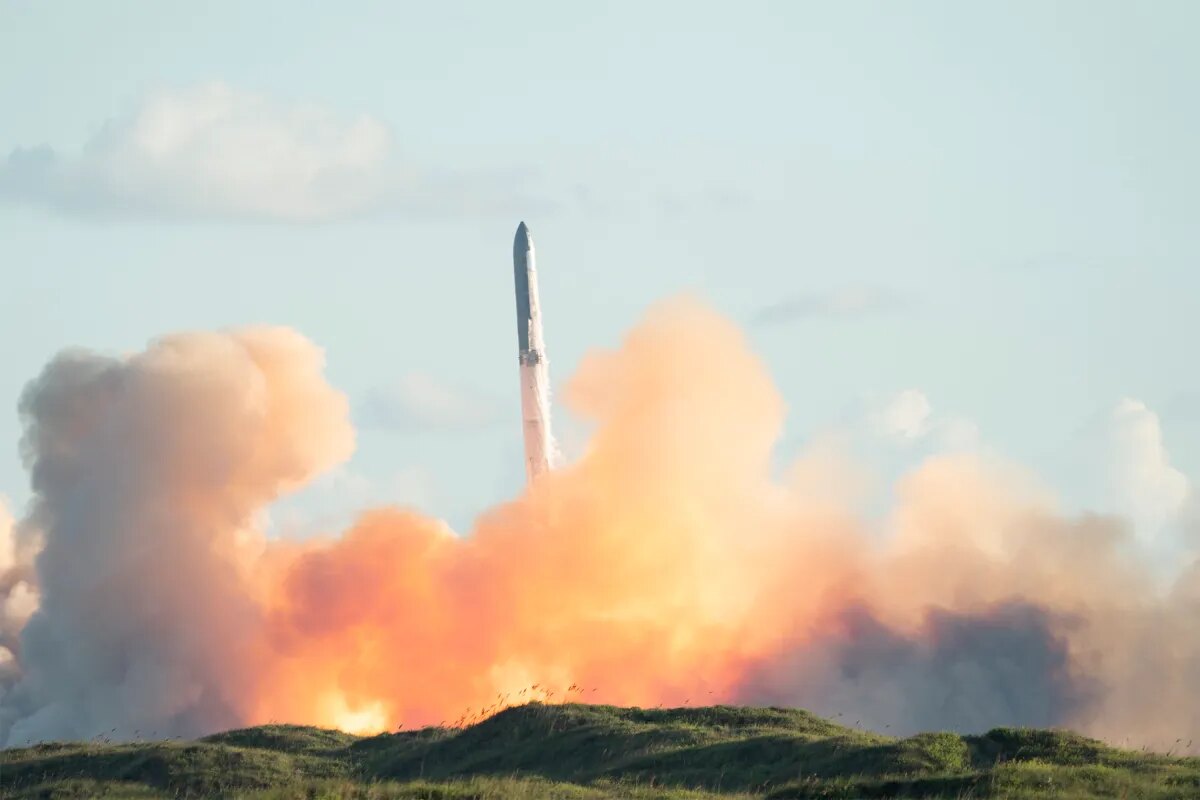
SpaceX plans to launch the 14th test flight of its Starship vehicle on September 22, targeting the first orbital insertion of the rocket’s upper stage. The company said the 75-minute launch window opens at 7:15 a.m. Central Time.
The mission is also intended to deploy 26 third-generation Starlink satellites into SpaceX’s network of 10,000 internet satellites. If the satellites reach orbit as planned, the flight would be Starship’s first to generate revenue for SpaceX’s launch division, even though the customer is another part of the same company.
An orbital test with an operational payload
Starship’s Flight 14 follows a July test in which SpaceX deployed V3 Starlink satellites for the first time. Those satellites were intended to test the vehicle’s deployment capability and burned up in Earth’s atmosphere after roughly 20 minutes. The coming mission raises the objective: the upper stage is now meant to enter Earth orbit.
Achieving that outcome would be a significant program milestone after billions of dollars in investment. SpaceX has said it intends to retire Falcon 9 and Falcon Heavy in favour of Starship when the newer system can fly reliably several times per week. That objective is particularly important following SpaceX IPO, AI and Starship commitments, which set out the company’s IPO context, AI ambitions and major Starship commitments.
Flight 14 will test only one part of the wider operating model. SpaceX ultimately needs Starship to reach orbit, return to Earth and be turned around quickly enough to support the launch cadence promised during its IPO process.
Recovery attempts remain off the flight plan
SpaceX will not attempt to catch the Starship upper stage with its launch tower on this mission. Elon Musk recently stepped back from that possibility, saying an explosion would be too large a setback at this stage. The company also will not try to catch the Super Heavy booster.
The booster has presented difficulties in recent test flights. On Flight 13 in July, it struggled to relight its engines after separating from the upper stage. SpaceX said it has introduced another set of several hardware and software modifications intended to address issues observed on that flight.
The upper stage performed more smoothly on Flight 13 despite not reaching orbit, completing a simulated landing in the Indian Ocean. It remained intact after tipping into the water, allowing SpaceX to recover and slowly tow it to its Texas headquarters. SpaceX said analysis of that recovered vehicle led to additional heat-shield changes for Flight 14.
What businesses should watch
The September mission can demonstrate orbital delivery and a live satellite deployment, but it is not a full proof point for rapid reusability. Businesses assessing future launch capacity should distinguish a successful orbital test from the separate requirements of controlled return, booster reliability and repeatable turnaround operations.