


Tesla Targets Dallas Launch for Cybercab Robotaxi Expansion
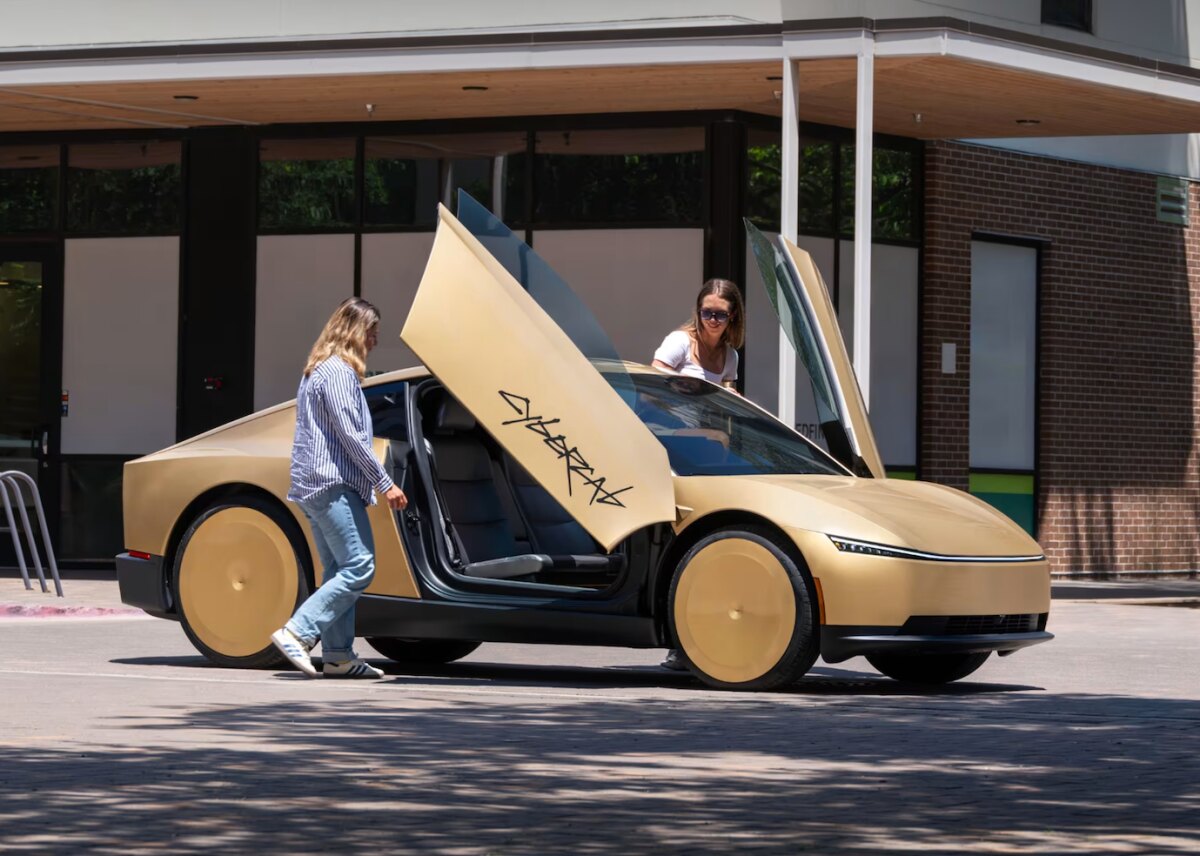
Tesla says it will begin expanding its Cybercab robotaxi service beyond Austin, Texas, with Dallas scheduled for next month and further city launches planned before the end of the year. The company also said it expects to start selling Cybercabs to fleet operators by year-end, while its existing small robotaxi fleets use Model Y SUVs in Dallas, Houston, Miami, Orlando and Tampa.
On Tesla’s third-quarter earnings call, chief financial officer Vaibhav Taneja described a far broader transportation ambition. He said the company is starting with moving people between places but wants to “own transportation of any kind on Earth.” Tesla has shown a multi-passenger Robovan concept, although the call did not establish whether additional vehicle types are in development.
Scale is central to Tesla’s case
Tesla argues that the Cybercab is cheaper and easier to manufacture than competing robotaxis, potentially allowing the company to compete on price with operators such as Waymo. Waymo is the current US market leader, with more than 4,000 robotaxis deployed across more than a dozen cities. Tesla must demonstrate that its model can operate at meaningful scale outside Austin for that claim to be tested.
The company points to a recent increase in miles driven by its self-driving vehicles. In the context set by Tesla Cybercab Austin testing begins, the move from Austin testing toward broader deployment makes operational performance, not only production capacity, the critical measure.
Tesla provided little detail about the financial contribution of the ride-hailing operation. Elon Musk said the business would not be noticeable in Tesla’s overall financial results until the second quarter of 2027 and could become significant in the third or fourth quarter of next year. Taneja said utilization is improving when asked about paid robotaxi miles, but did not provide figures.
Reporting metrics and approvals remain open issues
Tesla also changed the robotaxi chart in its shareholder letter. Its second-quarter letter reported “Cumulative Paid Robotaxi Miles,” a measure that showed a 36% decline from the first quarter. The new letter instead uses “Cumulative Unsupervised Robotaxi Miles,” which records fleet driving whether or not passengers are paying.
Taneja said manufacturing teams consider the Cybercab among Tesla’s easiest products to scale, but he identified regulatory approvals as a prerequisite for fast deployment. In September, after the Austin launch, the National Highway Traffic Safety Administration opened an investigation into whether the Cybercab complies with federal motor vehicle safety standards. Tesla says the vehicle complies, despite lacking features currently required by those standards, including a brake pedal and side mirrors. NHTSA has proposed removing some requirements, but a rule change is still likely months away.
Software limits also shape rollout
Ashok Elluswamy, Tesla’s vice president overseeing autonomy, said rollout limits are not purely regulatory and are driven by the capability of the AI software. Tesla has expanded service hours from 6 a.m. to 9 p.m., then to 10 or 11 p.m., and plans to reach 2 a.m. soon. The service does not operate on highways or in certain conditions, and Tesla intends to address more challenging scenarios by year-end.
For businesses evaluating robotaxi services or fleet purchases, Tesla’s city targets should be considered alongside verified paid utilization, the progress of safety capabilities and the regulatory path for the Cybercab’s design.