


Tesla Cybercab Launch Puts Its Robotaxi Strategy to the Test
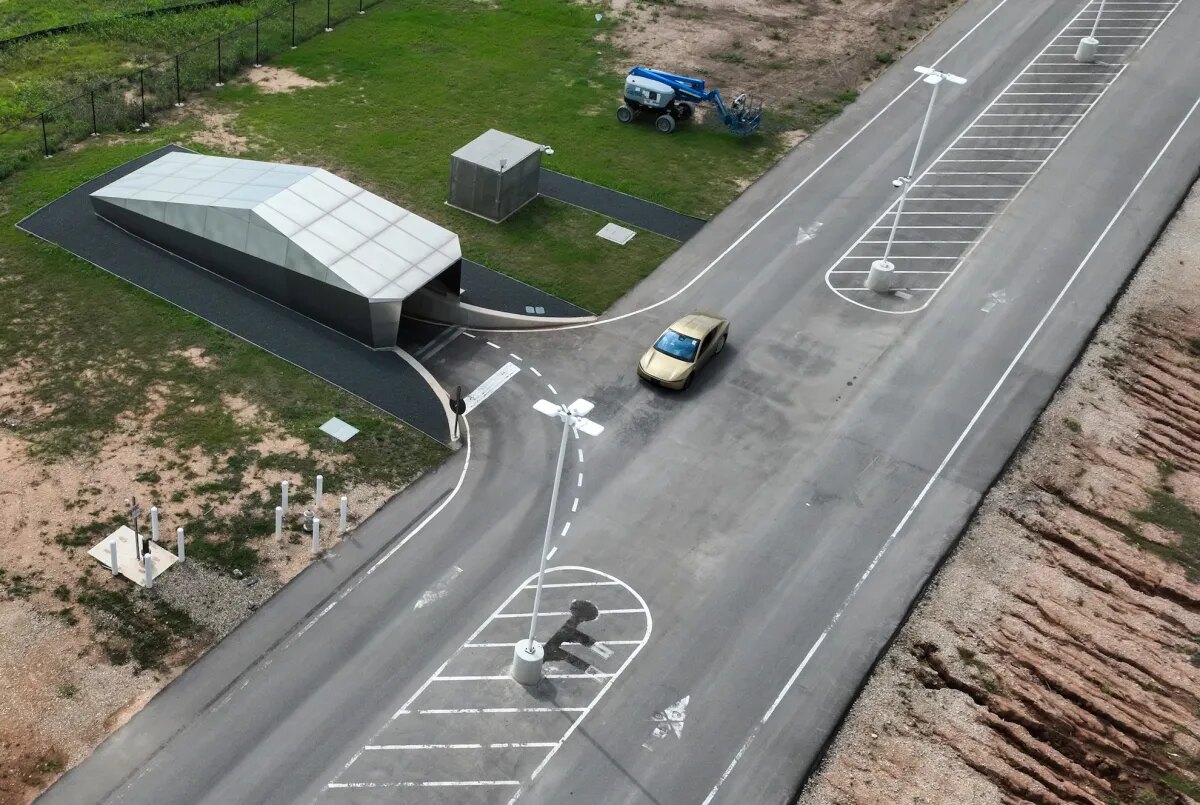
Tesla is preparing to launch the Cybercab in Austin, Texas, presenting a small gold two-seat sedan without a steering wheel or pedals as the next step in its robotaxi strategy. The company has not specified whether the event will begin with a limited downtown ride service or a wider deployment. At the time of reporting, Texas had 420 autonomous vehicles registered in the state’s automated-vehicle tracker.
Tesla has placed Cybercabs in Austin and other US cities ahead of the event. Ashok Elluswamy, Tesla’s head of AI, said on X that the streets would not be the same, while Elon Musk replied “Yes” to a post suggesting the company was about to flood Austin. The messaging contrasts with the more cautious safety-focused posture Tesla executives had adopted in the months before the launch.
A purpose-built vehicle for autonomy
The Cybercab was first shown in 2024, but it reflects a much older Tesla ambition: converting its driving-automation work into a network of autonomous taxis. Musk had claimed in 2016 that every Tesla then being built could become fully autonomous with a software update. Tesla has since revised vehicle hardware several times, and Musk has acknowledged that millions of cars will need some form of hardware retrofit to become autonomous.
Tesla continues to develop Full Self-Driving (Supervised), its driver-assistance product. It still requires a driver to retain responsibility and liability. The Cybercab is intended to remove that model by operating without conventional driving controls. The company’s early Austin deployment, Tesla Cybercab testing in Austin, marked the use of robotaxi testing in the city before this dedicated vehicle was introduced.
The vehicle originated in work on a less expensive electric-vehicle platform. Tesla aimed to apply lessons from the Model 3 and Model Y, its principal mass-market successes, to a platform costing about half as much to build. Musk ultimately chose not to develop a manually drivable vehicle on that platform, instead focusing it on the Cybercab.
Scale, cost and operating constraints
Tesla began its Robotaxi pilot in Austin last June with modified Model Y SUVs. During its early months, an employee sat in the front seat and could stop the vehicle if necessary. Tesla has reported a few dozen Austin incidents, mostly minor crashes involving stationary objects; some also involved teleoperators moving vehicles remotely at low speed.
The Model Y-based service has expanded to several other cities in Texas and Florida. Yet Tesla disclosed in July that paid miles in the network were declining. The company’s view is that a scalable service requires the Cybercab, which is smaller and lighter than other Tesla vehicles and uses a lower-capacity battery pack. Using fewer raw materials, particularly for the battery, is meant to reduce manufacturing cost and potentially improve the economics of a deployed fleet.
Visibility raises the operating test
Tesla’s robotaxi operations have so far been limited to geofenced areas, even as some operating zones have expanded. A small network in only a few cities also encounters fewer driving edge cases than Waymo’s fleet of 4,000 robotaxis. Tesla’s current Model Y vehicles are less conspicuous than sensor-equipped autonomous vehicles from some competitors, while a gold Cybercab will be far easier to identify on public roads.
The practical business implication is that Tesla must demonstrate more than a low-cost vehicle design: the Cybercab’s value depends on safe, reliable operation at scale, where its performance and any failures will be highly visible.