


Tesla Cybercab guidance details child access and crash response
Tesla sets initial passenger limits for Cybercab
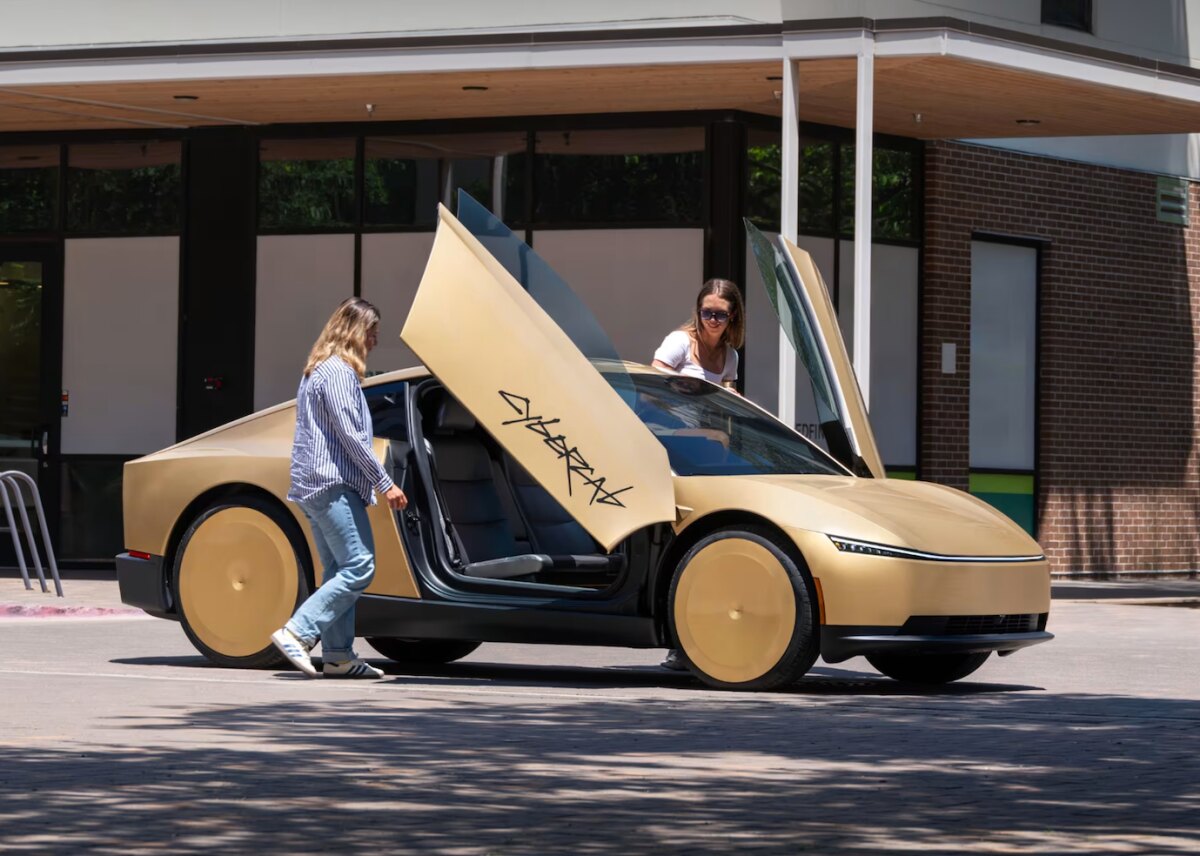
Tesla has published further operating details for its Cybercab robotaxi, including a restriction that currently prevents children under 13 from riding in the vehicle. The guidance also sets out the vehicle’s crash response, its electronic door system and the brake-by-wire design Tesla is using in the two-seat autonomous car.
Minors aged 8 to 17 may ride in Tesla’s Robotaxi Model Y SUVs, but Tesla says all passengers under 18 must be accompanied by an adult in both vehicle types. Tesla provides child-seat guidance for the Model Y and Cybercab, yet the Cybercab does not include standard LATCH anchors. Child seats can instead be secured using the seat belt.
The restriction arrives as Tesla seeks to establish its robotaxi service around a vehicle designed to operate with cameras and AI rather than a human driver. Its early testing programme, including Cybercab testing without steering controls, has focused attention on how a vehicle without a steering wheel or pedals will meet operational and safety expectations.
Crash sequence and door access
Tesla’s documentation describes the actions Cybercab will take after a collision. Airbags will deploy, doors will unlock, hazard and interior lights will switch on, and the high-voltage battery will be disabled. The windows move to a vent position, the vehicle applies its brakes to stop and park, and the infotainment system begins a two-way connection with Tesla’s rider support team.
Door operation is a prominent element of that sequence. Cybercab uses electronic door latches and is designed to open doors automatically at the beginning or end of a ride. Riders can also use a small exterior button. Inside the cabin, Tesla places a manual door release in a visible location on each door armrest, providing a mechanical option if the electronic system is unavailable.
Cost-focused engineering choices
The vehicle uses brake-by-wire technology: electronic actuators control the brake calipers rather than a hydraulic system pumping fluid through lines. Elon Musk described electric brakes as a way to avoid the complexity of routing hydraulic plumbing around the vehicle. Tesla had already used steer-by-wire in the Cybertruck, removing the physical connection between the steering wheel and front wheels.
Other documented limits remain. Tesla says Cybercab windows cannot be fully opened at this time, without providing a reason in the released material. Reporting from Jeremy Judkins also indicated that the vehicle’s USB-C outlets deliver 90W of power, substantially above typical in-car USB output.
Tesla must demonstrate Cybercab safety to riders, local governments and the National Highway Traffic Safety Administration, which has opened an investigation into the rollout. For businesses considering robotaxi access, the practical implication is to review age rules, child-seat arrangements, emergency procedures and service limitations before treating the vehicle as a general-purpose transport option.