


Thrive Capital argues for concentrated AI investing over VC euphoria
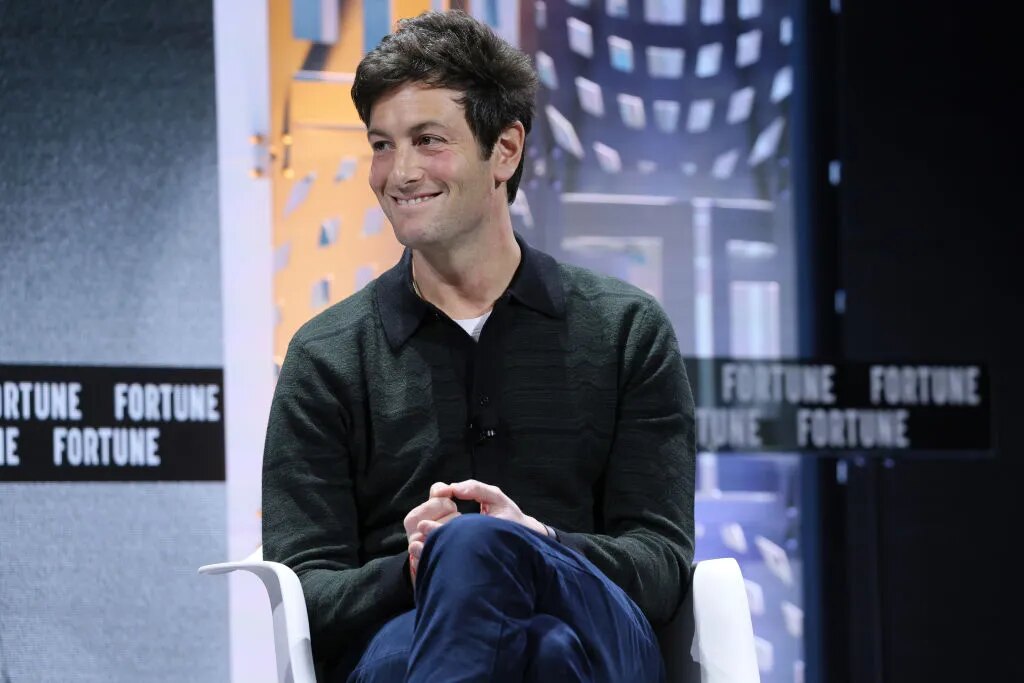
Thrive Capital founder Joshua Kushner has used the firm’s first investor letter to challenge the venture-capital industry’s approach to the artificial-intelligence boom. While calling AI’s opportunity enormous, Kushner warned that excitement must not weaken investment discipline and said Silicon Valley can become focused on “hyperincremental technological turns” rather than technology’s eventual direction.
Thrive is itself a major AI investor, with stakes in OpenAI, Anduril, SpaceX, Wiz, Ramp, Stripe and Cursor. Its distinction, Kushner argued, is concentration: Bloomberg estimates that roughly 90% of the capital in each Thrive fund is deployed into its 15 largest investments. The firm seeks to concentrate its time, capital and energy on a small number of people and ideas.
A concentrated alternative to outlier investing
Kushner’s position contrasts with the “outlier” model associated with Marc Andreessen, under which venture firms make many investments expecting a small number of exceptional winners to offset the losses. He argued that markets move between fear and enthusiasm, neither of which should substitute for judgment.
Thrive’s results illustrate the scale of its existing portfolio. Its $516 million 2022 early-stage fund made early investments in OpenAI, Anduril and SpaceX and was worth more than $3.7 billion at the end of June, Bloomberg reported. Across its 15-year history, Thrive has increased its stakes in those businesses. Kushner disclosed $60 billion in assets under management, a 41% gross internal rate of return across all funds and a 33% net IRR.
The firm also returned more than $1 billion in liquidity to investors during the previous 12 months. Kushner said there could be an opportunity for billions of dollars of additional liquidity in coming quarters, without identifying which portfolio companies may exit.
Applying AI inside established businesses
Thrive’s thesis is not limited to backing companies that challenge incumbents. Kushner wrote that industries can be transformed from the inside out. That approach is visible in Thrive Holdings, a Thrive spinout that acquires companies and works with OpenAI to apply AI within their operations.
OpenAI took an ownership stake in Thrive Holdings in December 2025, while Thrive is a major investor in the AI lab. As part of that arrangement, OpenAI dedicated employees to work with Thrive’s companies. Thrive Holdings has acquired more than 70 businesses and employs 35 engineers.
The operating claims are specific: an accounting platform uses agents to produce tax returns 30% faster with 98% accuracy, while an IT services business has agents independently solving half of its help-desk tickets. The focus on visual AI also reflects a wider investor search for practical AI deployment, as visual AI platforms financed for enterprise use shows how computer-vision platforms are being financed around product development and enterprise use.
What the letter means for business leaders
Kushner’s central distinction is that a fast-growing company is not automatically exceptional, and an exceptional company is not necessarily a good investment at every price. For businesses evaluating AI vendors, acquisitions or internal deployments, the practical implication is to test measurable operating outcomes, implementation capacity and commercial terms rather than treating market excitement as evidence of value.