


US robotics restrictions confront China’s scale advantage
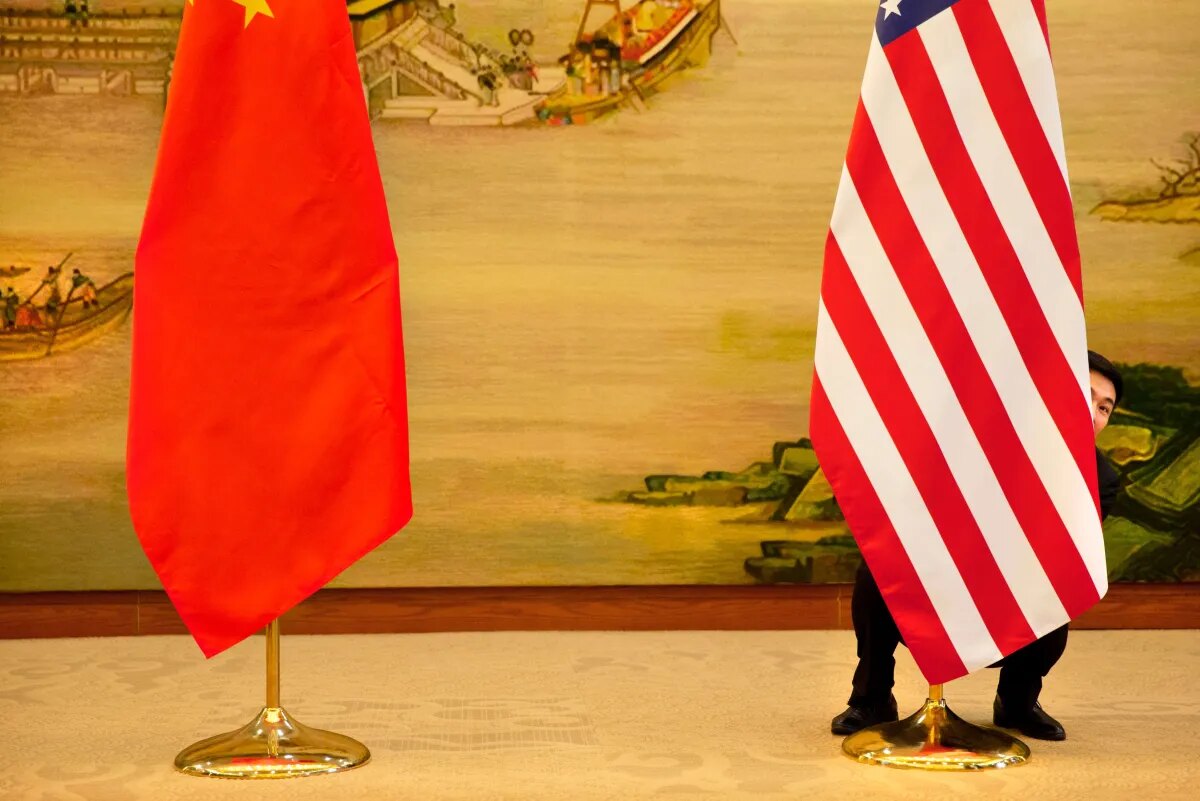
Washington tightened restrictions on foreign-made advanced robotic systems in July and August and imposed steep tariffs on imported drones and their components on national-security grounds. The drone tariffs take effect in September, while additional tariffs on components are scheduled for 2027. The measures arrive as Chinese manufacturers hold a substantial position in drones and humanoid robots.
The policy direction broadens the Federal Communications Commission’s Covered List, created in 2021 to address telecommunications and surveillance equipment from companies including Huawei, ZTE and Hikvision. It was later expanded to foreign-made drones and, most recently, advanced robotic devices. The central question is whether limiting Chinese systems in the US changes competition globally, or chiefly redirects it to other markets.
Scale remains China’s principal advantage
Counterpoint reported global humanoid robot shipments of 22,000 units in the first half of 2026, with the vast majority supplied by Chinese manufacturers. Its figures show that AgiBot, Unitree, Galbot, UBTECH and Leju Robotics, all Chinese companies, accounted for 86% of worldwide shipments during that period.
Ankur Saxena, investment director at TDK Ventures, contrasted US strengths in frontier AI, software and semiconductor innovation with China’s manufacturing scale, supply-chain depth and costs. Soumen Mandal of Counterpoint Research said Chinese makers are reducing costs by bringing more of the technology stack in-house and using the country’s broader manufacturing base. Unitree is developing more components internally, while XPeng can draw on chip and vehicle-manufacturing experience as it enters robotics.
Greater volumes can place more robots in real-world use, producing data that may improve the technology while helping reduce costs further. That dynamic is difficult to address solely through market restrictions, particularly where manufacturers already have established component supply chains and domestic demand.
A more regional market may emerge
Chinese robotics companies are targeting price-sensitive markets facing labor shortages in Europe, Southeast Asia, Latin America and the Middle East, Mandal said. He expects humanoid suppliers to pursue a path similar to Chinese electric-vehicle makers: scale in the domestic market, expand overseas and eventually build local production. Manufacturing environments with repetitive work and demographic pressures could be early areas of demand.
The drone sector already illustrates a possible division. Bentzion Levinson, founder and CEO of Heven AeroTech, described a US-led market for American-made, NDAA-compliant systems alongside a China-led market centred on low-cost, high-volume production. He argued that Western suppliers are unlikely to win the low-end consumer segment on price, but can compete in long-range autonomous systems for defence and critical infrastructure, where security requirements are more significant. Battery and payload architecture may become important competitive areas as drones gain capability.
Allied supply chains are not a direct substitute
Agility Robotics welcomed the FCC decision and said it could address security concerns before foreign advanced robots become deeply embedded in the US market. The company highlighted Digit, its humanoid designed and assembled in the United States, while calling for continued access to tools and technologies needed for robotics research.
Saxena said the alternative to China is a diversified allied supply chain rather than a wholly domestic US one. Japan contributes industrial robotics and precision manufacturing, South Korea has capabilities in electronics, batteries and automobiles, and Taiwan is a significant semiconductor producer. Hyundai, which owns Boston Dynamics, and Toyota are among the automakers investing in robotics. Still, Chinese components remain deeply embedded in global robotics, limiting any simple replacement.
For businesses procuring drones or robots, the practical implication is to evaluate compliance requirements, component exposure, regional service capacity and the operational fit of each system alongside purchase price.