


Wajo positions Fo agent around trust, payments and call controls
Wajo puts trust at the centre of its Fo personal agent
Wajo, founded by former Google and DeepMind engineer Shivani Poddar, says its Fo personal agent is being used in 107 countries and has grown 10x since launching in late September. Investor Vinod Khosla has backed the company’s approach, arguing that trust will be decisive as personal-agent products such as Meta’s Muse and Instinct compete for users.
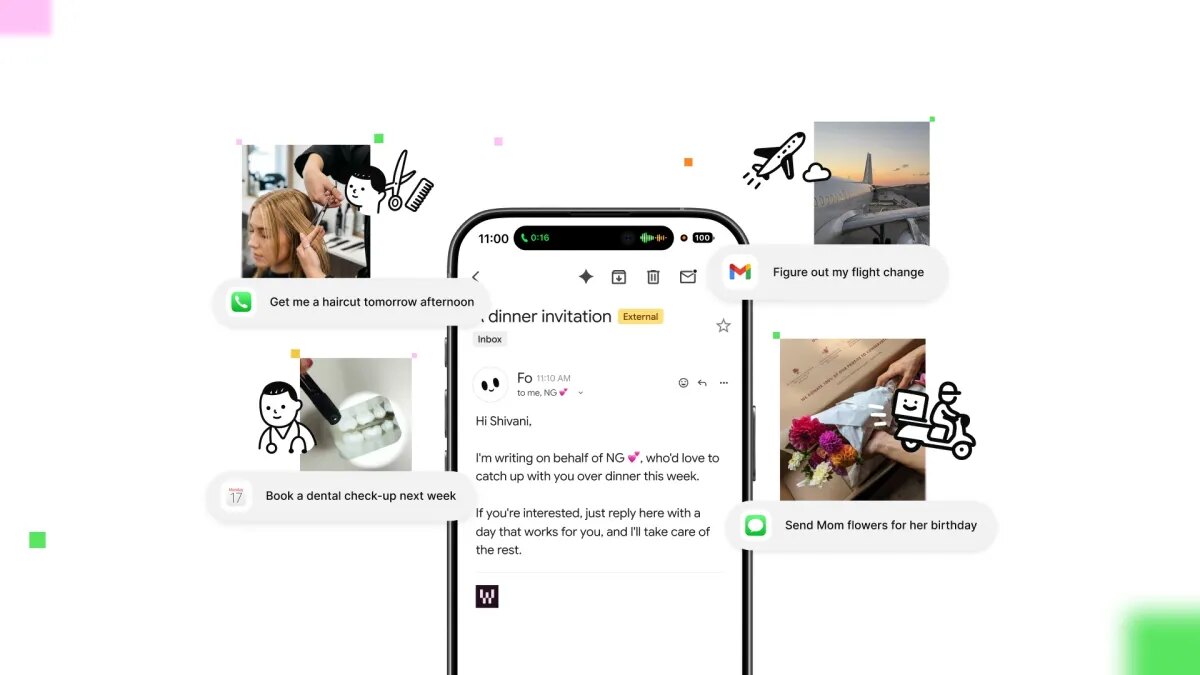
Fo is designed to handle everyday errands across iMessage, WhatsApp and a web interface that presents possible tasks as cards. Its work is grouped into areas including scheduling, gifting and life administration. The agent can call businesses or other people for a user, including to book or cancel services.
Khosla told TechCrunch that an agent acting on a person’s behalf must earn trust, and said Wajo’s architecture is focused on trust and safety first. He contrasted that approach with competitors, raising concerns about handing personal data to companies whose business includes advertising.
Calling, payments and human assistance broaden the task model
Beyond messaging and web tasks, Fo can create a virtual credit card to make payments without disclosing the user’s details. It has its own email address and can communicate with people and businesses. When a website or service blocks an AI agent, Wajo says Fo can ask the user to intervene or form a group with the user and business for verification.
The product can also hire a human to complete a task when necessary. In an early test reported by TechCrunch, Fo successfully called an airline to check for upgrades. A separate request to call a partner with a reminder did not go smoothly, and the disclosure that an agent was making the call was less clear.
That experience points to a question facing personal agents as calling features reach more users: how an AI calling on someone’s behalf should identify itself. Muse and Instinct are also introducing calling capabilities gradually, making disclosure practices an issue that may receive greater attention across the category.
Wajo’s proposed safeguards face a demanding test
Poddar said agents need trust built in from day one because teaching them to unlearn is not yet solved. In her view, an agent given access to personal data at the outset could retain that access in the future, so architecture and product choices both matter.
Wajo has applied for a patent covering its virtual-card system, which it says hides users’ information from sites. For calls, it plans a trusted-contact list defining who a user’s agent may call. Recipients will be able to tell the agent not to call again, and Wajo says Fo will record that preference.
The startup has also received backing from Jeff Dean and Gokul Rajaram, although it did not disclose the amount raised. Wajo says it will explore multi-user social settings for Fo in the coming months while maintaining privacy. For businesses, the practical implication is to examine an agent’s data access, payment mechanism and call-disclosure controls before permitting it to act in customer or employee workflows.