


US Air Force awards WindBorne balloon data deal worth up to $49M
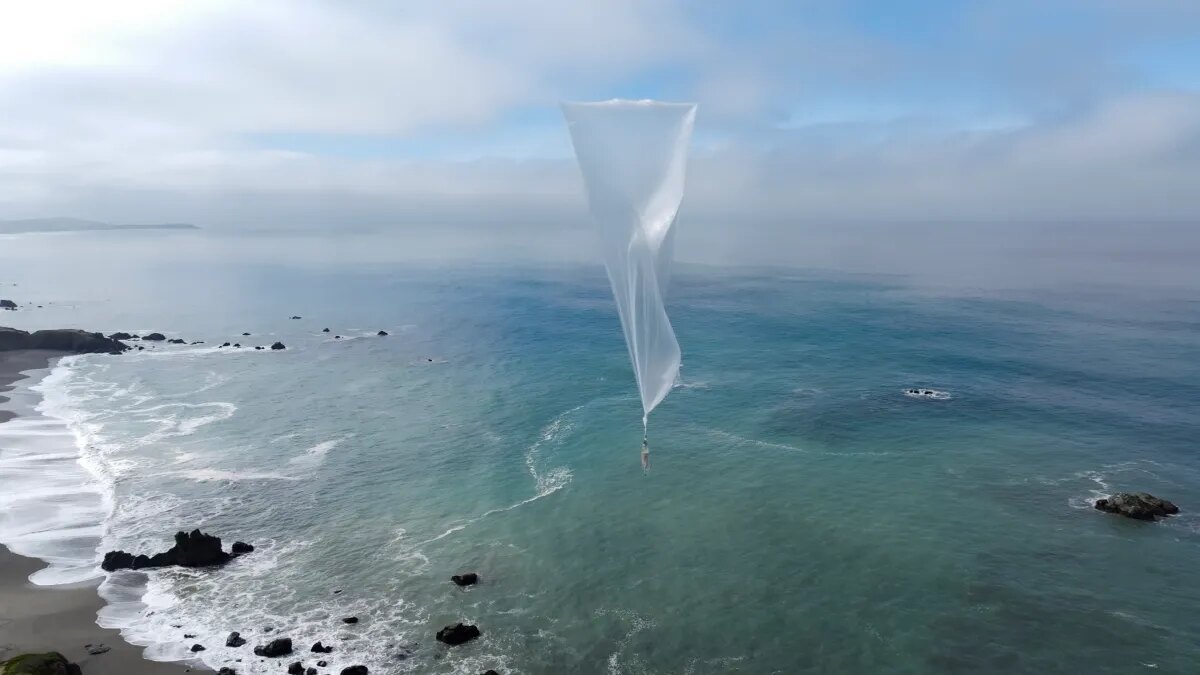
The U.S. Air Force has awarded WindBorne Systems a contract to buy atmospheric data from its autonomous weather-balloon fleet, with a potential value of up to $49 million. The Redwood City, California, company says this is the largest contract in which it has participated, although the Air Force has ordered $1.7 million in data so far.
The arrangement is structured as an on-demand purchase vehicle rather than a guaranteed $49 million commitment. The Air Force can order observations for specified regions at specified times, allowing it to procure data as operational requirements arise.
A global balloon constellation for weather observations
WindBorne currently operates about 700 weather balloons around the world. Their sensors collect atmospheric readings that the company sells to customers and feeds into its own deep-learning weather forecasting system.
Co-founder and CTO Andrey Sushko said the contract can support continued growth of the balloon constellation as well as research and development intended to improve balloon hardware and performance. He said the award was made without competitive bidding after the government determined that WindBorne was the only company able to collect global data in a manner that met the needs of these operations.
The company has already worked with U.S. government organizations including the National Weather Service, the U.S. Air Force and the U.S. Navy. Its ability to expand the fleet is also connected to WindBorne’s $37 million scaling round for scaling AI weather forecasts and commercial operations.
How the data supports WeatherMesh
WindBorne released WeatherMesh 6 earlier this summer. The company says the latest version produces more accurate forecasts than the traditional European Centre for Medium-Range Weather Forecasts model, which simulates atmospheric conditions using the laws of physics.
AI weather forecasting has accelerated with transformer architectures and the European Centre for Medium-Range Weather Forecasts release of a large weather dataset. Such models can ingest decades of weather data and generate predictions faster than the supercomputer-based systems that run detailed equations approximating atmospheric behaviour. The source notes that both AI and traditional forecasts remain necessary for useful weather understanding.
Navigation as an operational use of forecasting
In August, WindBorne said it became the first organization to send an unpowered flight system into the eye of a typhoon to collect data. Its balloons have no engine; the company manoeuvres them by changing altitude, bleeding air or dropping sand ballast so that they enter winds travelling in the intended direction.
Sushko described this as an operational use of deep learning that depends on reliable wind and weather models, the ability to navigate with them, and a sufficiently large constellation with balloons in suitable locations. For organizations relying on weather intelligence, the business implication is clear: they should evaluate both the coverage available for their locations and the distinction between a contract ceiling and data that has actually been ordered.