


Google activates Suncatcher TPU satellite for orbital AI tests
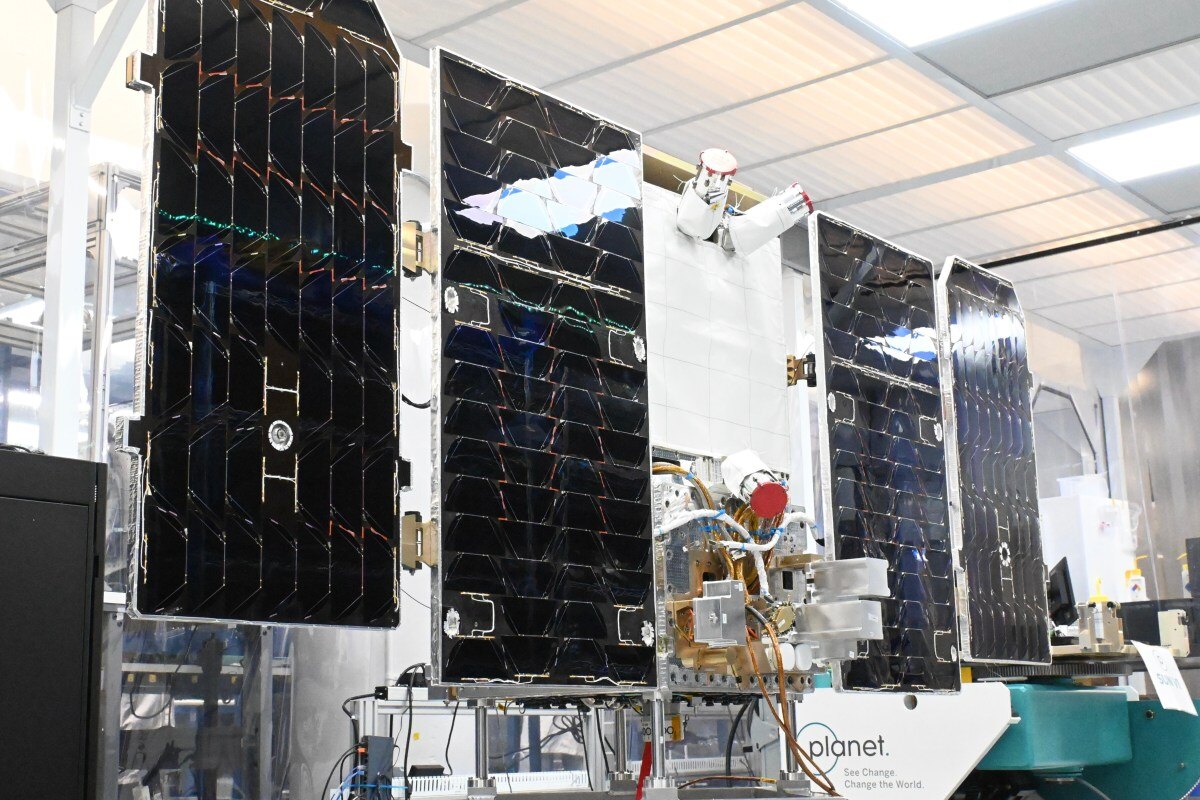
Google brings its Suncatcher prototype online
Google’s Suncatcher prototype space data-center satellite is communicating with the ground after launching earlier this month aboard a SpaceX Falcon 9 mission carrying more than 100 spacecraft. The satellite carries a single Google Tensor Processing Unit (TPU), generates up to 1 kW of electricity and is designed to test inference computing in orbit.
Following a commissioning period of about three weeks, engineers sent the onboard Google DeepMind Gemma 4 model its first prompt: write a haiku about being in space. Google also used the spacecraft to report conditions in its orbit. A spokesperson said the satellite was operating nominally.
Radiation and power are central constraints
The experiment is aimed at future constellations of closely flying satellites that could perform substantial inference workloads together. For now, the TPU’s power requirements limit operation to about 20 minutes at a time, adding a significant constraint to space-to-ground communications and computing schedules.
The ongoing campaign will examine performance under thermal stress and in the space radiation environment. Google has tested TPUs in particle accelerators on Earth, but this mission will provide operational evidence of radiation effects on the hardware rather than simulated results.
One risk is a radiation-induced bit flip: a change to a stored memory value that can corrupt data without being detected by standard monitoring tools. Ground tests indicated that radiation should have a limited effect on inference workloads, while model training may be more exposed. The flight test is intended to assess whether those expectations hold in orbit.
Path toward a distributed orbital system
The project extends the orbital infrastructure work outlined in Google TPU tests for orbital data centers by putting a single TPU through an operational test in space. If the processor proves capable, Google plans to launch two more satellites with advanced chips in 2027.
Those planned spacecraft are expected to generate more power and demonstrate optical inter-satellite links. Google’s Starcloud project is pursuing high-speed links between satellites to support coherent distributed workloads, distinguishing its approach from proposals centred on individual satellites handling inference independently.
The longer-term economics also depend on launch capacity. Suncatcher researchers estimated in a peer-reviewed analysis that SpaceX would need 1,800 Starship flights to achieve learning-driven cost reductions comparable with those of its earlier vehicles. Google is framing the effort as infrastructure that could become economical in the 2030s, while Starship remains under development.
Business implication
For organisations evaluating AI infrastructure, Suncatcher is a reminder that the viability of novel compute platforms rests on measured reliability, power availability and network performance, not processor capability alone.